
Dr. Ken Rietz
Twice a month, we’ll be sharing a new curated newsletter featuring concise summaries of key articles in the agriculture and energy commodities markets—along with direct links to the full pieces— as well as related charts from the Fundamental Analytics platform. Our goal is to give you a quick, insightful overview of the latest developments and hopefully spark your interest to dive deeper into the full articles.
The topics covered this month in our agricultural summaries are the following:
• Soybeans: Why and how U.S. farmers should diversify demand from China
• Corn: Technology that could replicate the advances of 1980s biotech
• Wheat: Drought collides with SCOTUS tariff ruling
• Wild card: Indonesia might struggle to meet U.S. import goals
Soybeans
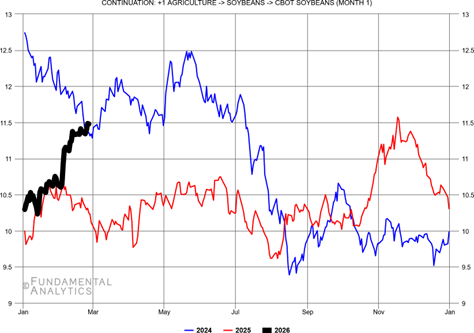
Figure 1: Front-month CBOT soybean futures
Chained to China? What U.S. farmers can do to build demand
Pam Caraway, Farm Progress
There is growing concern among U.S. agricultural leaders and economists about over-reliance on China as the primary export market for soybeans and other commodities. After years of China accounting for a large share of U.S. soybean exports, shifts in China’s economy, including slowing growth, demographic changes, and geopolitical priorities, have reduced its demand for U.S. soybeans. Even after meeting some trade commitments, China has frequently turned back to buying from competitors like Brazil, leaving American producers exposed to volatile demand patterns. Experts argue that this concentration risk highlights the need for diversification rather than depending heavily on a single market that may be influenced by broader political and economic pressures.
To adapt, the article suggests U.S. agriculture must strategically pivot toward strengthening trade relationships with other countries and bolstering domestic demand, such as through expanded biofuel use and closer economic ties within North America. It also notes that population trends in traditional export markets like China, many now plateauing or declining, could further limit future growth, emphasizing the importance of exploring emerging markets and innovative commercial strategies. Building resilience in trade, embracing flexible market approaches and seeking partners beyond China are presented as critical steps for long-term stability in U.S. soybean exports.
Wheat
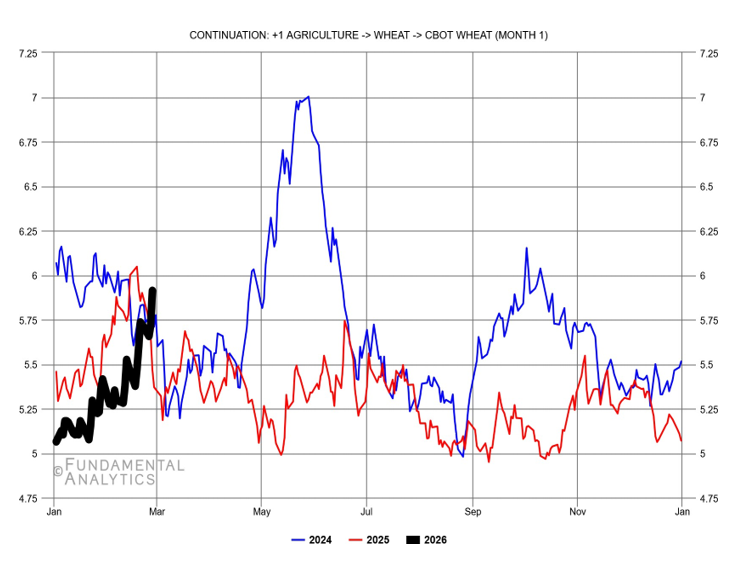
Figure 2: Front-month CBOT wheat futures
Wheat Prices Soar as Great Plains Drought Collides with Landmark SCOTUS Tariff Ruling
WRAL News
Global wheat markets have become highly volatile at the end of February 2026, driven by severe drought conditions across the U.S. Great Plains and an unexpected shift in U.S. trade policy. Prolonged dry weather, high winds, and wildfires have sharply reduced soil moisture and winter wheat crop prospects, leading to significantly lower yield expectations and helping push wheat futures up sharply. At the same time, strong overseas buying, especially from regions like the Middle East and North Africa amid geopolitical tensions, has tightened global supplies and added upward pressure on prices.
In addition to the weather-related disruption, a landmark U.S. Supreme Court decision struck down the executive branch’s authority to impose certain broad tariffs under the International Emergency Economic Powers Act (IEEPA), a ruling expected to lower future costs for imported farming inputs like fertilizer and machinery. This legal shift has created optimism about easing production costs even as growers grapple with climate stress. The combination of supply concerns and tariff changes has influenced markets, benefiting some agribusiness and machinery companies while highlighting the complex interplay between environmental risks and trade policy in shaping agricultural economics.
Corn
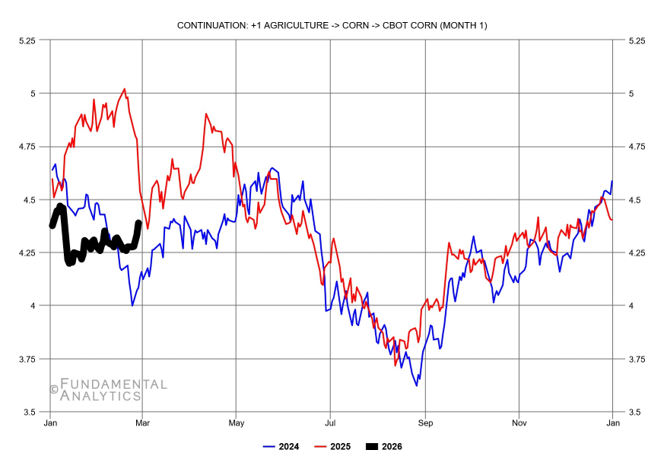
Figure 3: Front-month CBOT corn futures
The Technology Poised to Revolutionize Corn Yields — Just as Biotech Did in the 1980s
Tyne Morgan, AgWeb
Modern agricultural technologies, especially gene editing and advanced data analytics tools, are positioned to boost corn yields in a way that parallels the transformative impact biotech had on corn production starting in the 1980s. As companies like Pioneer celebrate milestones (such as 100 years in business), leaders in the seed and ag-tech sectors emphasize that innovations like CRISPR gene editing, machine learning, and predictive analytics are enabling more precise control over plant genetics and field management decisions. These advancements build on the legacy of past innovations — such as hybrid seeds and genetically modified traits — that significantly increased yield potential and crop resilience.
The article also stresses that these emerging technologies are not just incremental improvements but have the potential to reshape production practices by providing farmers with real-time insights and tools that improve decision-making throughout the growing season. Precision data gathered from sensors, drones, and satellite imagery, combined with powerful computational tools, can help optimize inputs like water and nutrients while identifying stressors early, which in turn enhances productivity. Together with cutting-edge genetic tools, this technology ecosystem could deliver another major leap in corn yields akin to the biotech revolution of past decades.
Wild Card
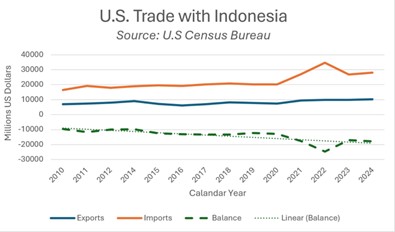
Figure 4: Exports and imports from U.S. to Indonesia
Indonesia may struggle to deliver on new US farm import promises, traders say
Reuters
Indonesia could have difficulty fulfilling its recent commitments to increase purchases of U.S. agricultural commodities under a new trade agreement with the United States. Under the deal, Indonesia agreed to reduce U.S. tariffs on its exports and, in exchange, significantly raise imports of U.S. farm products — including boosting annual wheat imports from about 1.1 million metric tons to 2 million, soybeans from roughly 2.2 million to 3.5 million, and soymeal from about 216,000 tons to 3.8 million. While traders see the expanded U.S. wheat imports as achievable, the dramatic increase in soymeal purchases, far beyond recent levels, appears unrealistic given current demand and sourcing patterns. Indonesia’s state-owned animal feed importer, Berdikari, has been tasked with boosting soymeal imports to help meet the target, but logistical and market incentives may limit how much it can buy at competitive prices.
Market participants also point out structural challenges that could impede these commitments. For soybeans, Indonesia already imports nearly all of its annual consumption (about 2.7–2.9 million tons), so the pledged volume likely exceeds domestic needs and could disrupt supply balances if forced. With soymeal, past U.S. purchases were minimal compared to the new target, and meeting such a jump would require policy adjustments and could involve purchasing at less competitive prices than other suppliers. The broader context is the U.S. effort to diversify its agricultural export markets beyond China amid ongoing trade tensions, but traders caution that Indonesia’s capacities and demand patterns may limit how fully the new trade pact’s agricultural targets are realized.
Trading Implications
While Indonesia is an important importer of U.S. agriculture, it is not big enough to swing the markets. Neither is it clear how much influence the article on diversifying soybean demand from China will actually produce. And the means by which the administration will re-enact targeted tariffs is not at all clear. But the article comparing GM and AI techniques on the future of corn could have a growing and immediate impact. The prudent trader would begin to investigate long-term long investments in corn futures.