
Dr. Ken Rietz & Bobby Simmons
With mainstream coverage focused almost entirely on the Iran war and the Strait of Hormuz blockade, we opted to highlight lesser‑covered energy stories in this newsletter that you may not have seen elsewhere, but still offer very important insights.
The topics covered this month are:
- Natural gas: Why US natural gas looks to dominate its market
- Crude oil: Venezuela resumes shipments of diluted crude oil
- Gasoline: Diesel prices rise faster than gasoline due to supply shortage
- Wild card: Why China is less likely to be hurt by rising oil prices
Natural Gas
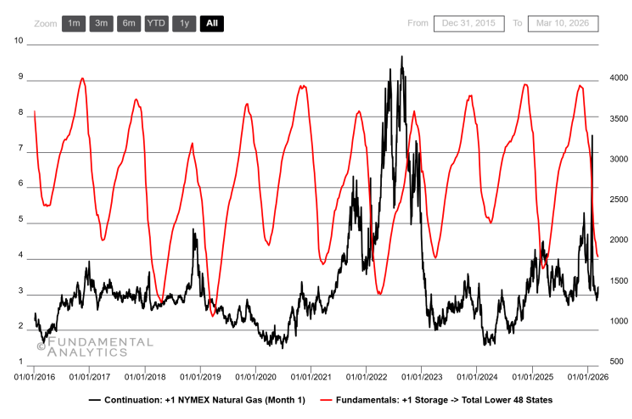
Figure 1: Natural gas futures prices and storage over 10-year period
U.S. LNG Dominance ‘Fearsome,’ as Energy Tech Development ‘Miles Ahead of Anyone Else,’ Souki Says
Christopher Lenton, Natural Gas Intelligence
Energy executive Charif Souki said the US has become a dominant force in global energy, producing about 20% of the world’s liquids and 25% of its natural gas. He credited rapid technological innovation and expansion in production for placing the country at the center of global energy markets while also holding significant geopolitical influence. U.S. natural gas output has more than doubled over the past two decades, while storage has remained relatively stable.
Souki also argued that global energy demand continues to grow and dismissed concerns about a long-term LNG oversupply. Instead, he believes LNG producers must control more of the supply chain to manage costs and volatility. He added that growing technologies such as AI are highlighting the importance of reliable energy supplies, reinforcing the strategic value of the U.S. energy sector.
Crude Oil
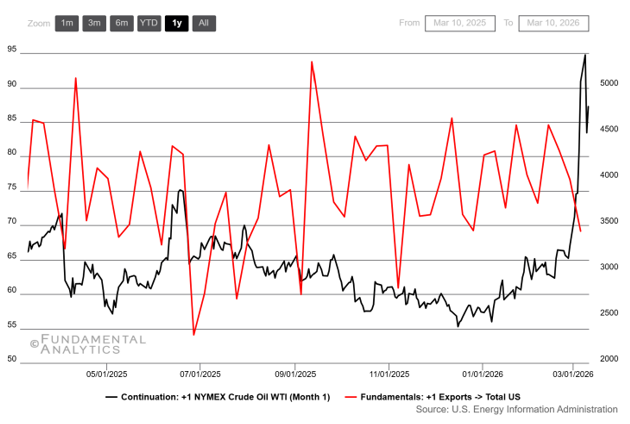
Figure 2: Crude oil prices and exports over 1-year period
Venezuela resumes exports of diluted crude oil after 15-month pause
Marianna Parraga, Reuters
Venezuela has resumed exports of diluted crude oil (DCO) after a 15-month pause, with a 500k barrels shipment sent by Chevron (CVX) to the U.S. Gulf Coast. The crude, produced by blending extra-heavy oil from the Orinoco Belt with imported naphtha, is widely used by refiners in countries such as the US and India.
If shipments continue, they could help reduce Venezuela’s large stockpiles, which reached about 4.8 million barrels by late February. While other companies have exported Venezuelan oil in recent months, most shipments have been of the country’s main grade, Merey crude, leaving other varieties largely stored and contributing to high inventory levels.
Gasoline
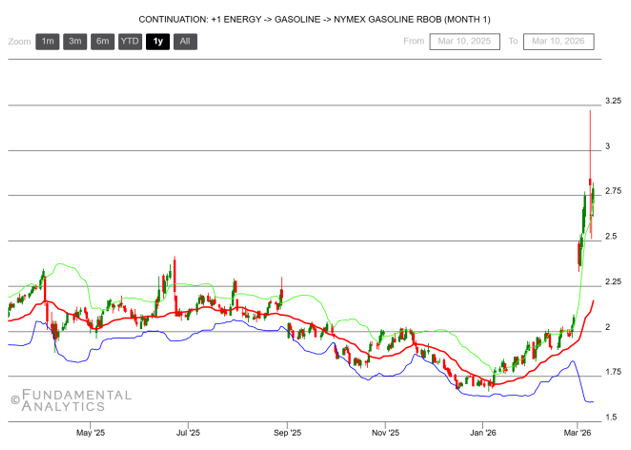
Figure 3: Gasoline prices over 1-year period
Diesel prices are climbing even faster than gas prices. Here’s why you should care
Chris Isldore, CNN
Diesel prices are rising faster than gasoline, jumping 84 cents (22%) to about $4.60 per gallon since the conflict in Iran began, compared with a 47-cent (16%) increase in gasoline. Diesel started the price shock in tighter supply, partly due to strong winter demand for heating oil in the Northeast, which is chemically similar to diesel. Analysts warn prices could approach $5 per gallon if the trend continues.
Higher diesel prices matter because the fuel powers much of the global economy. Trucks, shipping companies, and cargo carriers rely on diesel to transport goods, meaning rising costs are often passed on to consumers through higher shipping rates. Diesel is also essential for agriculture, fueling farm equipment and the delivery of fertilizer, which could push up food and commodity prices during the key spring planting season.
Wild Card
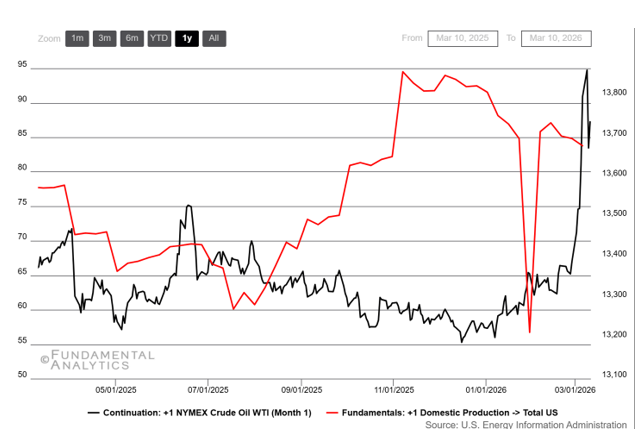
Figure 4: Crude oil futures prices and production over 1-year period
Why China can withstand oil’s surge past $100 more easily than other countries
Evelyn Cheng, CNBC
China is expected to be less affected by oil prices rising above $100 because it has spent decades strengthening its energy security. The country has built large crude reserves of approximately 1.2 billion barrels, equal to roughly three to four months of supply, and reduced its reliance on vulnerable shipping routes like the Strait of Hormuz by developing overland pipelines and diversifying energy imports. As a result, only a small share of China’s total energy consumption depends on oil shipments through that route, helping cushion the impact of geopolitical disruptions such as the ongoing conflict involving Iran.
Another key factor is China’s shift toward a more diversified energy mix. While the US increased domestic oil production and India remains highly dependent on imports, China has expanded renewable energy and electric vehicle adoption, which has already reduced oil demand by over one million barrels per day. Although coal and fossil fuels still play a large role, the growing use of renewables and the electrification of transportation are gradually lowering China’s exposure to oil price shocks, making its economy more resilient to global energy volatility.
Trading Implications
It is clear that the price of LNG (and therefore natural gas) and crude oil will not go down to stay until after the Iran war is over, and in fact will go up as the reserves of natural gas and crude oil are depleted and bidding for scarce gas and oil becomes more frantic as time goes on. So, going long natural gas and crude oil futures should be a reliable trade. But there are two cautions here: First, the price of these will be very volatile, and therefore the futures will be expensive. But also, be careful to sell those futures when it looks as though the war will be resolved, because the price will likely drop rapidly.