
Dr. Ken Rietz
China has finished buying the minimal amount of US soybeans that it promised to buy due to the October 2025 agreement that Presidents Trump and Xi made, ending a complete boycott of US soybeans that began earlier in 2025, and starting a new major slowdown. China has been reacting to the hard tariff hit from the US, now subdued by the US Supreme Court ruling. China has shown little inclination to return to buying US soybeans, aggressively buying soybeans from Brazil, which is thrilled to have China’s attention. But a crack has been widening in the China-Brazil soybean connection. That is the subject of this month’s commentary. But first, we look at the price of CBOT front-month soybean futures.
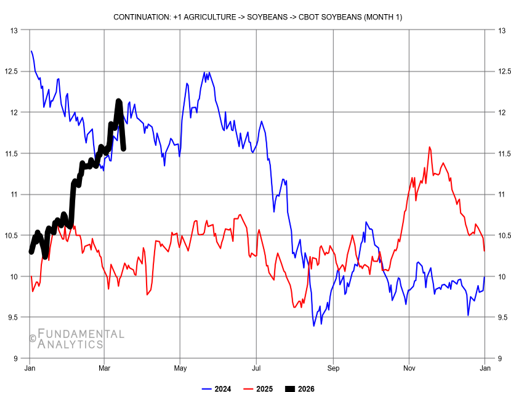
Figure 1: CBOT front-month soybean futures
Note that the soaring price of soybean futures this year, indicating a higher price for soybeans, has also increased since the start of the Iran war. The same has been happening in most commodities. In reaction to that, some farmers are now selling some of their soybeans and corn from storage to cash in on high prices and reap a profit on them, to reduce storage costs, and to reduce volatility risk. But that would be a different commentary.
China has a soybean problem. Between livestock feed and human food, they consume far more soybeans than they produce locally, and are forced to import soybeans as a result. China has a very limited amount of rich soil and an abundance of low-grade soil that is incapable of growing non-GM soybeans. So, they are making progress in creating a GM variety of soybeans that can grow in low-grade soil. They are not yet growing enough to allow them to reduce imports by very much. And here a dilemma occurs. China is very concerned about food security, meaning they don’t want to be dependent on any external source of food. So, the Chinese Communist Party (CCP) is promoting GM food. But the general population views GM produce as “unnatural” and repulsive, grounded in a distrust of the government. The soybeans imported from the US and Brazil are almost entirely GM as well, not helping the situation.
That dilemma doesn’t favor either Brazil or the US. The crack, then, widening between China and Brazil is in a different place. Lately, Chinese inspectors of soybean shipments from Brazil have found a variety of problems, like live insects, beans covered with pesticides and fungicides, and heat-damaged beans. The Chinese initially banned five soybean exporters, and now require certifications of new inspections. Soybean transports from Brazil without certifications will be turned away from China, including those currently in transit. Brazil is taking immediate steps to resolve this problem.
One thing that US soybeans are known for is their pristine condition. Yes, they cost more than Brazilian soybeans, but the quality is much higher. This means that the US could fill in that widening crack between China and Brazil. Is it guaranteed? Of course not. But it remains a potential, at least partial, remedy to watch for.
How do you trade this? The Iran war has caused the price of most commodities to rise, and those price levels will not go down until the end of the war. Time spreads might be a reasonable approach if you could determine a date beyond which the war will likely be finished. China’s rejection of some soybean shipments will create a temporary global glut, but Brazil will be working hard and fast to normalize its soybean shipments to China. It is unlikely to create a decent trading opportunity.