
WTI crude is supported by U.S. stock draws but faces limits from expected OPEC+ supply. RBOB gasoline is pressured by high inventories and weak seasonal demand. Natural gas is weighed down by strong production, despite heat-driven consumption.
Crude Oil
WTI futures lower due to OPEC oversupply risks
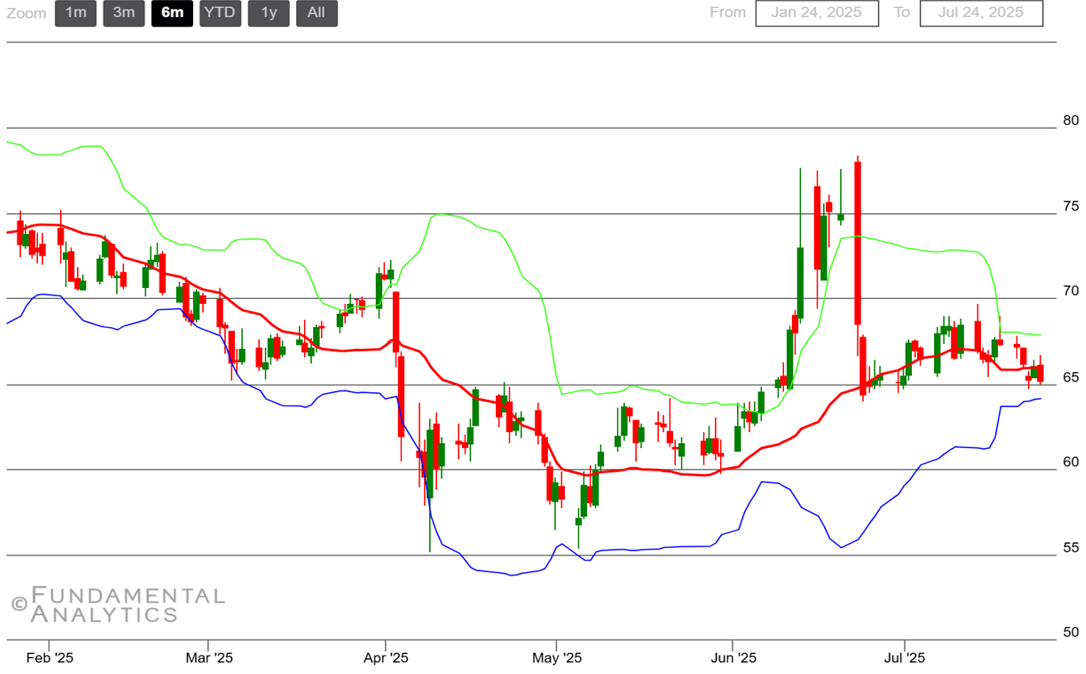
- Hefty U.S. stock draws firmed near‑term balances. Consecutive EIA reports showed commercial crude inventories falling a combined 7 mb, pushing stocks 9 % below their five‑year norm even with refinery runs hovering near 95 % utilization—giving WTI a fundamental floor.
- OPEC+ supply outlook limited upside. With the producer group set to add a further 548 kb/d in August and delegates signaling no change to that plan at the late‑July JMMC, traders largely faded rallies on expectations of fresh barrels entering an already well‑supplied market.
- Shale response remained muted despite a rig uptick. Baker Hughes posted the first weekly rise in the oil‑rig count since April, yet at 422 rigs activity sits near a four‑year low, implying only a gradual U.S. output recovery and tempering longer‑term bearish sentiment.
- Geopolitical noise added flickers of risk premium. New U.S. sanctions targeting Iran’s “shadow fleet” and continued GPS‑jamming incidents around the Strait of Hormuz briefly lifted front‑month volatility, but the market judged supply disruption risk limited, keeping WTI largely range‑bound.
Gasoline
Unexpected inventory build-up drove gasoline lower
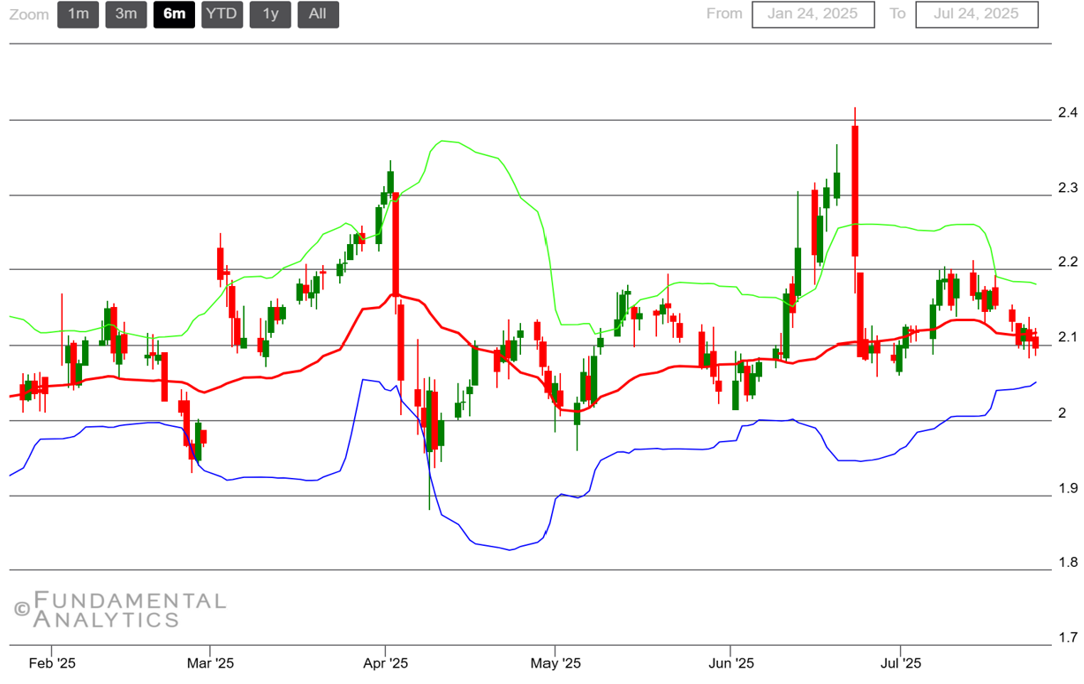
- Inventory seesaw kept supply comfortably covered. EIA data showed a surprise 3.4 mb build early in the window followed by a 1.7 mb draw, leaving nationwide gasoline stocks still slightly above the five‑year norm and tempering any sustained RBOB rally.
- Demand indicators underperformed peak‑season norms. Motor‑gasoline product supplied averaged ~8.8 mb/d, down 4.9 % y/y, while AAA noted sub‑$3.20 pump prices and muted holiday driving—evidence that structural efficiency gains and extreme heat continue to sap consumption.
- Robust imports and high refinery runs weighed on margins. Weekly arrivals briefly topped 100 kb/d, the highest in over a year, and Gulf‑Coast refineries held above 95 % utilization, ensuring ample barrels reached the East Coast and pressuring RBOB cracks.
- Tropical‑weather watch added only fleeting risk premium. A developing low‑pressure system in the Gulf prompted precautionary chatter about potential refinery disruptions, but forecasts later downgraded intensity, limiting volatility and keeping futures anchored near month‑to‑date averages.
Natural Gas
Natural gas prices reached 3-month low as production spikes
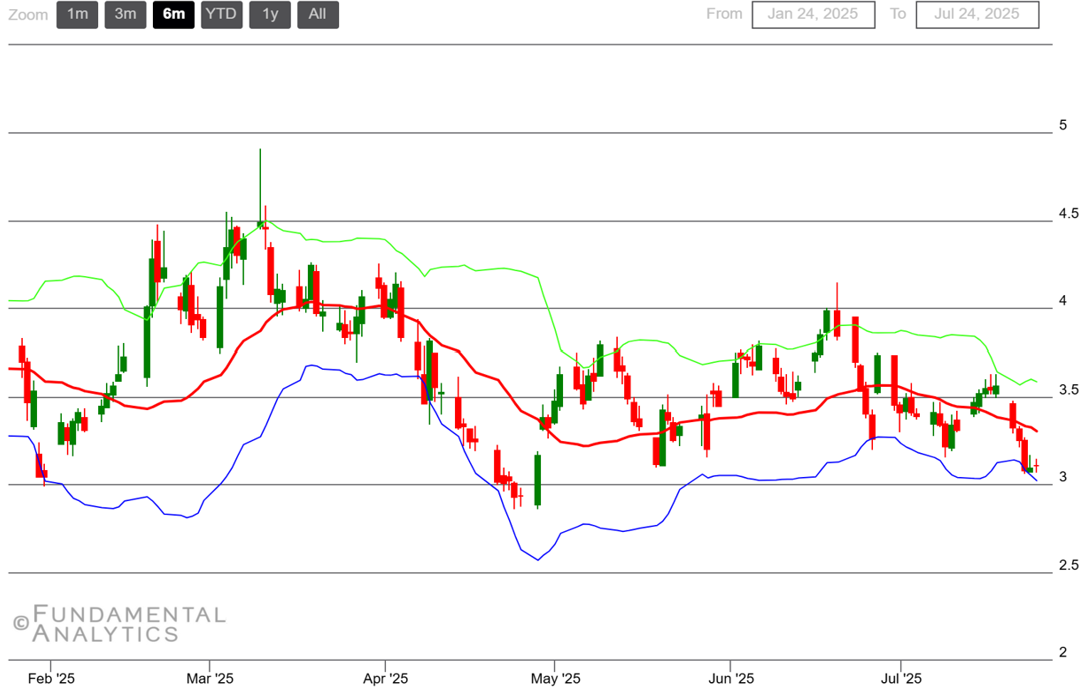
- Storage builds stayed bearish. Two successive EIA releases showed injections of 46 Bcf and 23 Bcf, lifting inventories above 3.07 Tcf—about 6 % over the five‑year norm—signaling a still‑comfortable cushion despite below‑average weekly builds.
- Heat‑driven power burn gave only fleeting support. Forecasts for the season’s most intense heat dome nudged futures 2 % higher and pushed Eastern‑seaboard load projections toward record territory, yet prices soon faded as traders focused on ample underground stocks.
- LNG maintenance clipped a key demand sink. Ongoing work at Sabine Pass and associated pipeline constraints cut feed‑gas flows by roughly one‑third, keeping total LNG intake near its lowest since winter and removing a key outlet for domestic supply.
- Robust production and muted export pull reinforced the ceiling. Dry‑gas output is still hovering around record highs near 106 Bcf/d even as the U.S. rig count trends lower, while Europe enters Q3 with storage refills tracking comfortably—dampening hopes for a late‑summer LNG bid.