
Grain markets stayed supply-led: heavy stocks and Black Sea competition capped wheat; Brazil harvest flow and China origin choice restrained soy; corn saw export/ethanol support offset by South American supply.
Wheat
Wheat prices bounce in Q1 but Russian exports seem to prevail
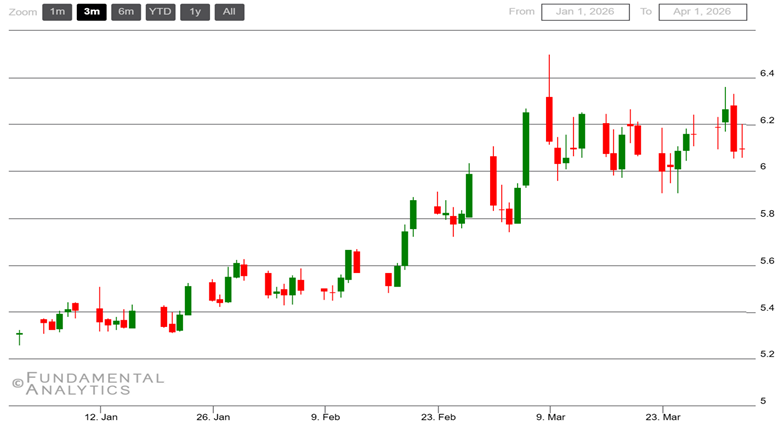
- Stocks-heavy narrative dominated the curve: USDA/ERS updates repeatedly kept global 2025/26 wheat ending stocks near a 5-year high (~277–278 MMT) and U.S. ending stocks elevated (e.g., 931 mb, the largest since 2019/20), capping July CBOT rallies despite periodic headline spikes.
- Russia stayed the global price setter: Russia’s 20 MMT grain export quota framework (effective mid-Feb) and zero wheat export duty reinforced aggressive Black Sea offer economics, keeping pressure on U.S./EU export premiums even when futures bounced.
- Import demand stayed active, but origin-competitive: Algeria continued to tender/buy sizeable milling wheat volumes (widely expected to be Black Sea-origin), while Russia pushed deeper into strategic buyers (e.g., Egypt “hub” diplomacy) — leaving U.S. demand “better,” but still fighting for market share on price.
- U.S. weather + acreage tightened new-crop optionality: Early winter freeze headlines briefly lifted weather premium, then late-March High Plains drought expansion and the USDA spring planting survey signaling the smallest U.S. wheat area since records began shifted attention from “big stocks now” to “less supply later,” helping underpin July risk premia.
Corn
July corn futures managed rebound after an early-year collapse
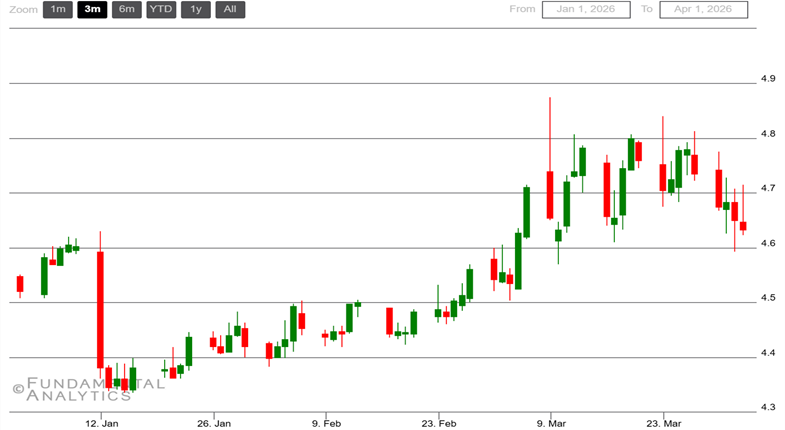
- USDA balance-sheet revisions kept July corn two-sided: The January update raised U.S. supply/ending stocks, February tightened carryout on stronger exports, and March lifted global corn ending stocks on higher foreign inventories (notably Brazil/Ukraine/India).
- Export demand stayed supportive, but competition continued to restrain gains: The USDA explicitly cited robust sales/shipments in lifting the U.S. export outlook, while later projections pointed to tougher South American competition as the main headwind to sustaining rallies.
- Ethanol demand remained the domestic “floor”: EIA guidance kept 2026 ethanol production/net exports near record highs, and weekly data showed ethanol demand rebounding—supporting corn grind even when export headlines cooled.
- South America injected both supply pressure and weather premium: Brazil’s safrinha planting pace and rainfall disruptions were closely watched—delays can add yield risk (supportive), but the baseline expectation of large Brazilian output kept global feedgrain availability comfortable (bearish).
- Geopolitics shifted risk premia and inputs: Repeated strikes on Ukraine’s Black Sea export infrastructure tightened logistics and raised costs even as the corridor kept moving large volumes; separately, Iran-war-driven fertilizer inflation pushed U.S. planting intentions toward fewer corn acres—supportive for forward supply expectations.
Soybeans
July soybeans closed Q1 with +10%, on supportive Chinese demand
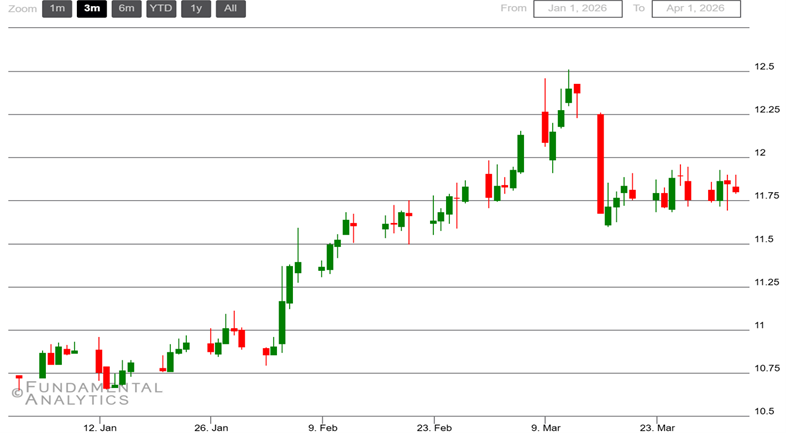
- USDA revisions kept old-crop July capped: Exports were pared back against bigger South American availability while crush was lifted; soybean-oil-for-biofuel was repeatedly cut, nudging the balance sheet heavier.
- Brazil’s record harvest anchored global supply and offered prices: Conab reiterated a near-178 MMT crop and the USDA lifted Brazil output, reinforcing “plenty of nearby beans” and competitive export offers into global tenders.
- China’s demand stayed large but origin- and policy-sensitive: 2025 imports hit a record, yet buyers leaned into cheaper Brazilian coverage; expectations for incremental U.S. business cooled after the U.S. Supreme Court tariff ruling reduced leverage.
- Crush strength supported the bean leg, but the oil balance capped upside: NOPA showed record processing with swelling soyoil stocks, while USDA flagged lower oil extraction and further reduced biofuel use—limiting complex-wide follow-through.
- Policy and geopolitics shifted forward expectations: The EPA’s pending 2026 biofuel volumes kept renewable-diesel demand “live,” while Iran-war-driven fertilizer inflation pushed U.S. planting intentions toward soy—bearish forward supply optics but supportive vs corn on relative costs.