
Welcome to our weekly Commodity News Roundup, a curated newsletter featuring concise summaries of developments in the agriculture and energy commodities markets—along with direct links to the full articles and related charts from the Fundamental Analytics platform. Our goal is to give you a quick, insightful overview of the latest market drivers and spark your interest to explore the full stories.
This week’s agriculture topics include:
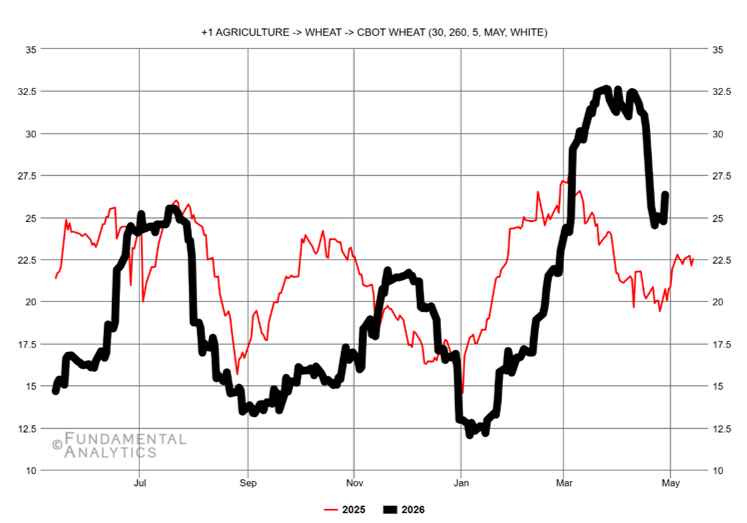
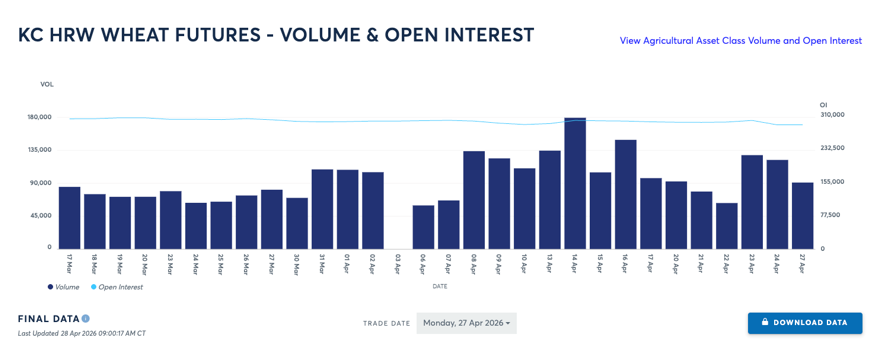
- Wheat: Severe drought across the U.S. Plains is threatening winter wheat yields, pushing some farmers to abandon harvests and intensifying financial strain.
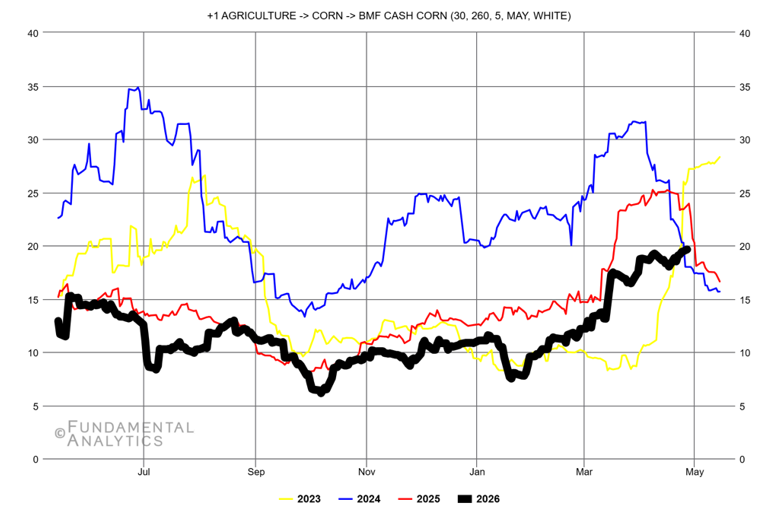
- Corn: Corn futures appear to have found a technical bottom, supported by strong demand, rising crude oil prices, and improving biofuel economics.
- Soybeans: U.S. soybean farmers continue to face financial pressure after China’s near‑halt in purchases, with government aid offering only partial relief amid broader structural challenges.
- Wild Card: Rising gasoline prices are strengthening the link between energy and biofuel markets, boosting demand for ethanol and influencing long‑term corn pricing.
Let’s begin.
Wheat
Source: Fundamental Analytics
Source: CME Group
Little Rain, Big Risks Ahead for Wheat Crops Across US Plains
Lauren Rosenthal, Erin Ailworth, and Ilena Peng, Bloomberg
Farmers across the Great Plains are facing severe drought conditions that threaten winter wheat yields, strain cattle operations, and deepen financial pressure already intensified by rising fertilizer costs tied to the Iran conflict. Nearly 90% of Nebraska and Oklahoma are now experiencing drought, with over half of Nebraska classified under “extreme” drought, limiting soil moisture critical for winter wheat development ahead of the summer harvest. Some producers are expected to abandon grain harvests entirely and instead graze cattle on wheat fields, while ranchers facing poor pasture conditions may delay or halt herd expansion due to expensive feed purchases. The drought is also discouraging fertilizer application, particularly nitrogen, as high prices and limited rainfall reduce the economic incentive to invest in crops, leaving the coming weeks of spring rainfall crucial for determining the outlook for the 2026 wheat crop and broader plains agriculture.
Corn
Source: Fundamental Analytics
Corn Prices Likely Just Hit a Bottom: Where Do They Go From Here?
Jim Wyckoff, Yahoo Finance
July corn futures are showing signs of a technical recovery after rebounding from strong support near $4.50, with recent price action breaking a prior downtrend and suggesting the market may have established a near term bottom. Analysts point to a supportive corn balance sheet and solid export demand, alongside rising crude oil prices that could strengthen ethanol demand and provide additional support for corn markets. A breakout above last week’s resistance level of $4.62 1/2 is viewed as a bullish signal that could push prices toward $4.90 or higher, while the $4.50 level remains a key support zone. Overall, improving technical momentum combined with stronger biofuel economics is contributing to a more constructive outlook for corn prices in the near term. Note that based on the historical trend, prices are generally lower which may signal a lead towards a potential stable point in May.
Soybeans
Source: Fundamental Analytics
Soybean Wars: When a Commodity Becomes a Political Weapon
Claire Carlson, Daily Yonder
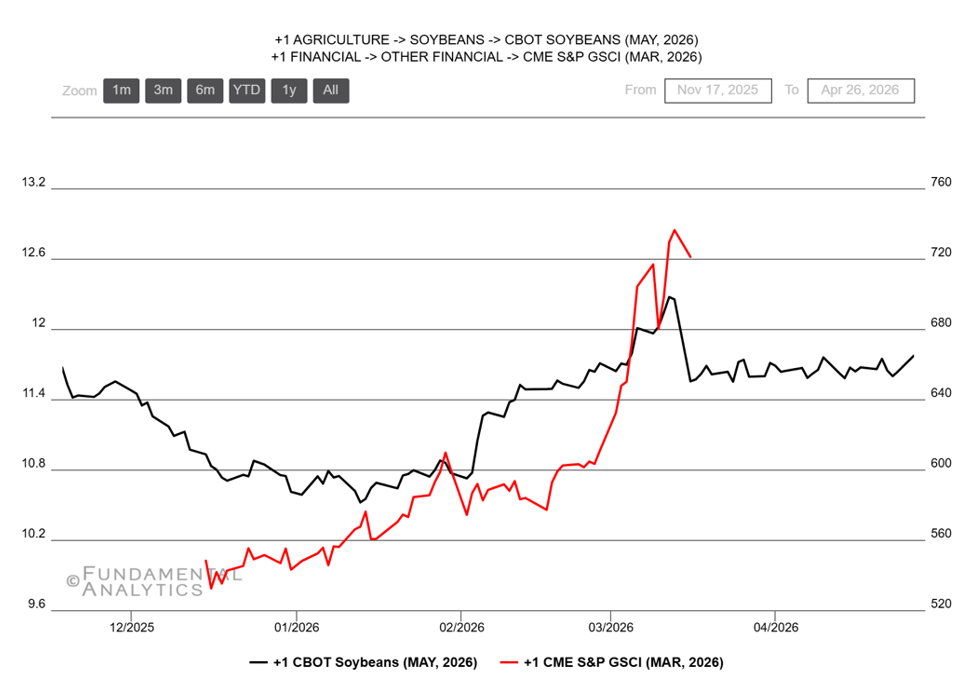
US soybean farmers faced severe financial strain in 2025 after China largely halted soybean purchases in response to US tariffs, cutting imports from nearly 27 million tons in 2024 to almost zero for most of the year before a partial October agreement restored limited buying. The collapse in export demand contributed to sharply lower commodity prices across agriculture, prompting the USDA to announce a $12 billion Farmer Bridge Assistance Program for 2026, including per acre payments such as $30.88 for soybeans, though many farmers argue the aid will not offset their losses. Producers and analysts described the payments as a temporary “band aid” solution that fails to address broader structural pressures including rising input costs, corporate consolidation, and ongoing trade instability. Many farmers compared the situation to the grain embargoes and farm crisis of the 1980s, warning that agriculture continues to bear the economic burden of geopolitical trade disputes. The S&P GSCI price increases following the spike in soybeans which further showcases potential geopolitical linkages.
Wild Card
Source: Fundamental Analytics
Gas Prices Shaping Biofuel Demand
Colton Tripp, KSAL
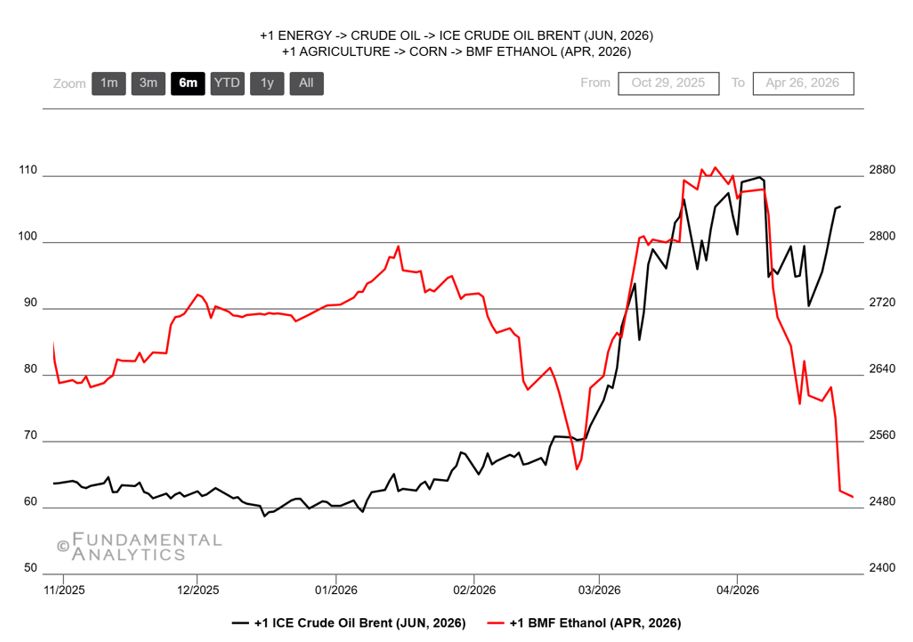
Rising gasoline prices are increasingly influencing US agricultural markets through stronger links between biofuels and fossil fuel economics, particularly for corn-based ethanol and soybean biodiesel. Agricultural economist Scott Irwin noted that while higher crude oil prices can raise farm input costs, they also tend to boost demand for ethanol, which now functions as a commodity closely tied to broader energy markets rather than a niche renewable fuel. The US currently produces roughly 1.5 million barrels of biofuels per day compared to petroleum consumption of about 20 million barrels daily, and ethanol’s role as an octane enhancer continues to support demand regardless of policy mandates. Irwin argued that the ethanol boom significantly lifted long term corn prices above what would otherwise likely have remained in the $3.25 to $3.50 per bushel range, though he warned that future agricultural risks may shift from shortages toward oversupply as acreage and yields continue to expand. In the chart below, crude and biofuel move in a relatively parallel fashion, supporting the article’s connection between the two commodities.
Trading Implications
Drought‑driven stress across the U.S. Plains keeps wheat markets tilted bullish, with yield risk and potential acreage abandonment raising the probability of weather‑premium pricing in the weeks ahead. Corn shows early signs of a technical bottom, and with crude oil strengthening and ethanol demand improving, traders may find opportunities in long corn or corn–energy correlation trades as biofuel economics firm. Soybeans remain vulnerable to geopolitical swings after last year’s collapse in Chinese demand, suggesting elevated volatility and a preference for options‑based hedging rather than directional exposure. Meanwhile, rising gasoline prices continue to reinforce the link between fossil fuels and biofuels, supporting long‑biofuel or long‑corn‑via‑ethanol strategies as crude trends higher. Overall, cross‑commodity correlations, especially between energy and grains, are likely to remain a key driver of near‑term positioning.