
Energy futures softened: WTI faced builds and tepid demand; RBOB slipped on weak consumption, draws, winter-blend shift; natural gas capped by above-average storage, shoulder-season power burn, and modest LNG recovery.
Crude Oil
Demand has decreased nearly -9% from previous year, -18% in YTD terms
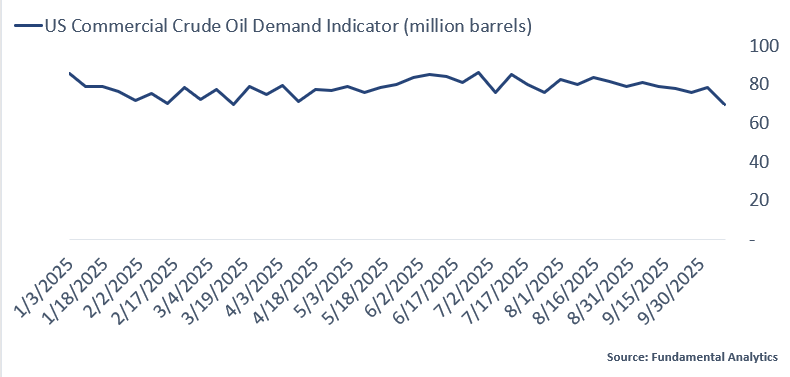
- U.S. balances loosened on back-to-back builds and lower runs. EIA reported consecutive crude inventory increases (≈+3.7 mb then +3.5 mb) as refinery utilization slipped from 92% to 86%, while distillate stocks fell sharply.
- Demand signals stayed tepid. EIA’s four-week averages showed total products supplied is down nearly 0.5% y/y and gasoline at ~8.7 mb/d (-3.2% y/y), muting RBOB-led support for WTI despite some diesel strength.
- Global supply expectations capped rallies. The IEA’s October report highlighted supply growth outpacing demand into 2026; OPEC+ maintained plans for a modest output uptick from November, and Kurdish exports’ resumption added barrels to seaborne flow.
- Geopolitics injected only brief risk premium. Tehran’s Hormuz saber-rattling and Ukraine’s continued strikes on Russian energy assets stirred headline volatility, but supply disruption remained limited.
- Gasoline
Gasoline demand remains at lows, raising growth concerns

- Inventories tightened only marginally. EIA showed U.S. gasoline stocks down 1.6 mb (week ending Oct 3) and 0.3 mb (week ending Oct 10), now slightly below the five-year norm, as refinery utilization slipped to 85.7% and gasoline output eased to 9.4 mb/d—supportive, but not a breakout catalyst.
- Demand ran softer than seasonal. The four-week average of motor-gasoline supplied hovered near 8.7 mb/d (-3.2% y/y), while AAA reported the national pump average drifting toward $3 on weaker demand and cheaper winter-blend, muting RBOB rallies.
- Imports and blend components cushioned supply. Total motor-gasoline imports (finished plus blending components) averaged ~532 kb/d in the latest week, helping balance East-Coast availability even as runs fell during maintenance.
- Geopolitics/weather added noise, not premium. Headlines around shifts in Russian crude buying and a quiet Atlantic kept risk limited; broader crude market softness and narrowing backwardation also weighed on product cracks.
Natural Gas
Futures dip below $3 mark as storage soars

- Storage surplus limited upside. Two successive EIA reports showed +80 Bcf injections, lifting working gas to 3.72 Tcf (~4% above the 5-yr average)—a comfortable cushion that kept rallies in check.
- LNG dipped, then rebounded. Fall maintenance curtailed Cove Point flows early in the window; by mid-October, total U.S. feed-gas rose toward ~16.5–17 Bcf/d, offering only modest support amid ample inventories.
- Shoulder-season cooling eased power burn. EIA noted fewer cooling-degree days across the Southeast and a ~19% w/w drop in Florida gas-fired consumption, softening prompt demand despite lingering regional heat pockets.
- External backdrop stayed comfortable. EU storage hovered in the low-80% range entering October, signaling limited urgency for additional LNG and tempering export-led support for NYMEX gas.