
Brent and RBOB stayed war-premium driven as Hormuz risks and tight global products met U.S. gasoline draws. Natural gas weakened on large injections and mild weather despite strong LNG exports.
Crude Oil
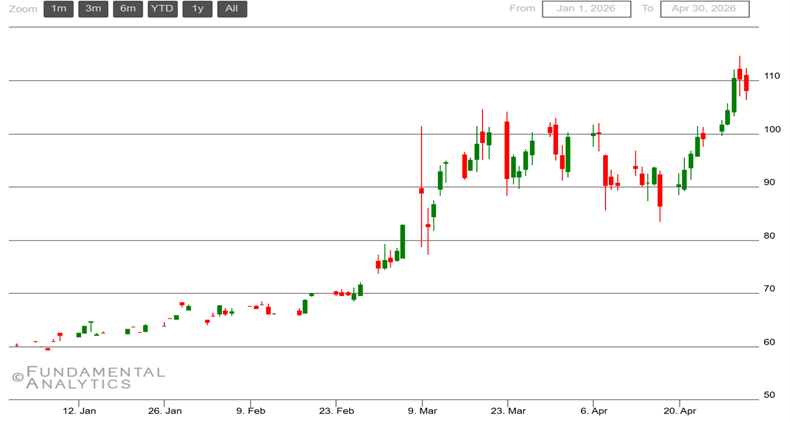
Source: Fundamental Analytics
- Hormuz chokepoint kept the front-month Brent bid: Restricted tanker movement and an unresolved U.S.–Iran standoff drove sharp risk-premium repricing, with prices repeatedly whipping on “talks progress vs escalation” headlines.
- Physical tightness trumped paper signals: Citi estimated global crude/product inventories could fall by roughly 900 mb even if a ceasefire held, as restart delays, logistics friction, and damage kept barrels effectively offline.
- Supply disruption looked prolonged: Reporting pointed to plans for an extended U.S. blockade of Iranian exports and efforts to mobilize partners to reopen Hormuz—supportive for Brent structure and time spreads.
- Refined-product stress fed back into crude: European jet fuel supply concerns rose as Middle East-loaded flows dried up, reinforcing middle-distillate tightness and supporting Brent’s premium vs inland U.S. crude.
- Macro “demand destruction” capped the upside at the margin: The World Bank warned the shock could lift 2026 energy prices materially and weigh on inflation/growth—limiting how aggressively the market chased rallies despite tight prompt fundamentals.
Gasoline
Gasoline continues to soar, while US exports hit a new record high
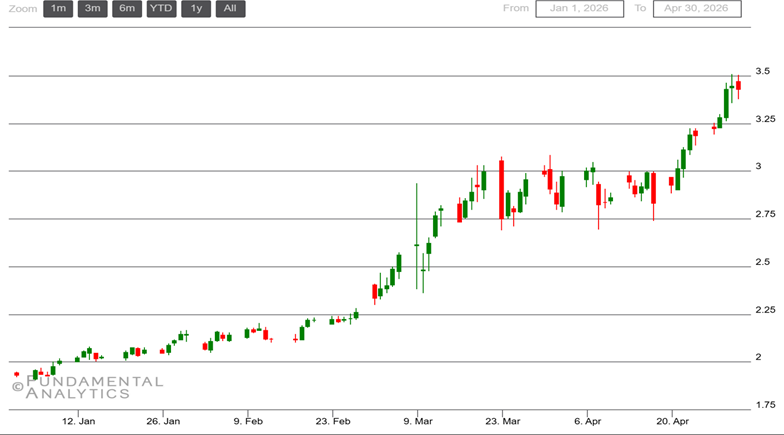
Source: Fundamental Analytics
- Hormuz-war premium spilled straight into gasoline: Shipping incidents, vessel seizures, and elevated Gulf logistics risk kept a meaningful geopolitical bid in RBOB alongside the crude complex.
- U.S. gasoline inventories drew hard into the shoulder-to-driving-season transition: Weekly EIA data showed another steep stock draw and flipped inventories below the seasonal five-year average, tightening prompt balances for the front month.
- Global pull on U.S. barrels tightened domestic availability: Record crude exports and a “world turns to the U.S.” trade flow boosted crude runs and export demand, reinforcing the narrative that domestic gasoline supply is competing with international deficits.
- Refinery supply helped, but didn’t erase tightness: Utilization stayed around the high-80s/low-90s, while gasoline production eased and motor-gasoline imports stayed modest—supportive for nearby RBOB when stocks were already falling.
- Regional stress amplified the headline risk: California’s pump prices surged toward ~$6/gal on import dependence, refinery constraints, and the Middle East disruption—adding political pressure and keeping the gasoline complex highly sentiment-driven.
Natural Gas
Natural gas struggles to remain above $3 mark
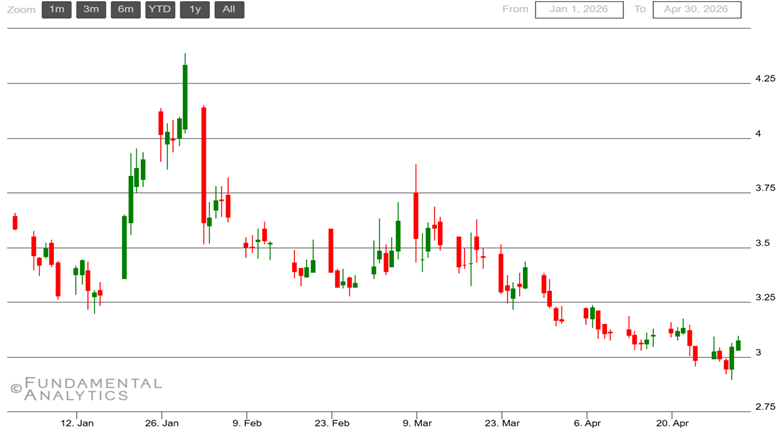
Source: Trading Economics
- Storage builds reinforced a shoulder-season surplus: EIA injections of +103 Bcf then +79 Bcf lifted working gas to roughly 2.06–2.14 Tcf, keeping inventories ~7% above the 5-year average and pressuring the front month.
- Mild spring weather kept domestic demand soft: Late-season warmth limited heating load and supported above-normal injections, repeatedly pulling the contract back after brief bounces.
- Output eased, but supply stayed broadly ample: Lower-48 production averaged about 109.8 bcfd in April (down from December’s record), reflecting some producer restraint—supportive at the margin, but not enough to overturn the storage overhang.
- LNG exports stayed near record and absorbed incremental molecules: Feedgas hit about 18.8 bcfd, with U.S. exporters temporarily plugging part of the Qatar supply gap, anchoring demand even as domestic weather turned bearish.
- Global war-driven flows boosted Asia pull, but also exposed logistics friction: U.S. LNG shipments to Asia surged as Middle East supply was curtailed; at the same time, vessel timing/buyer matching left some cargoes still seeking homes—adding volatility rather than a clean bull trend.