No Bulls in Sight, For Now

CBOT grains sagged as ample U.S. crops, record Brazilian output, limited Chinese demand, and trade restrictions outweighed brief weather hiccups and occasional export spikes, suppressing wheat, corn, and soybean futures.

Wheat

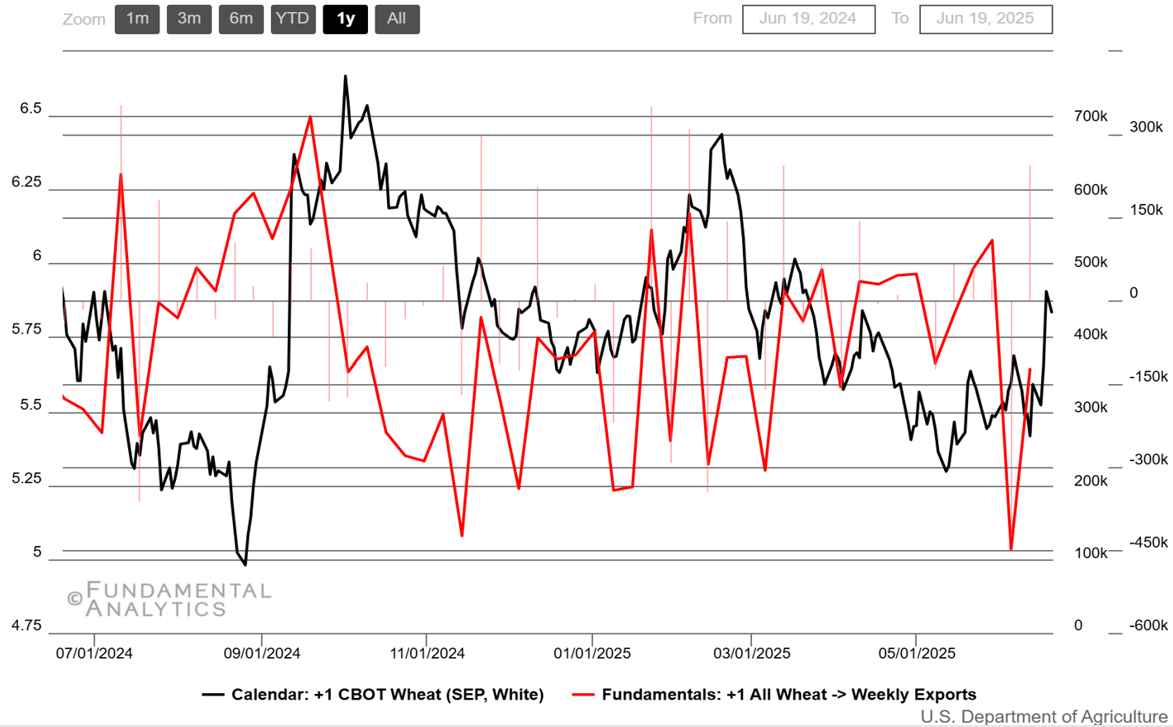
September futures settle just below $590 mark

  • Winter-wheat good/excellent ratings climbed to their best early-June level since 2019, and spring wheat improved too, yet persistent storms in Kansas and Oklahoma delayed cutting and stirred quality worries—keeping supplies ample but blunting weather-driven rallies.
  • USDA’s latest weekly report showed ≈ 427 kt of new-crop wheat booked, the strongest seasonal tally in more than a decade; Asian buyers led the interest, but the pick-up in demand was not large enough to offset burdensome U.S. carry-out, so Chicago prices stayed heavy.
  • Russia cut its floating export duty for the mid-June shipping window and leading analysts lifted the country’s harvest outlook toward 83 MMT, signaling aggressive Black-Sea offers that pressured CBOT spreads.
  • The bloc’s new tariff limits on Ukrainian grain, in force from early June, threaten Kyiv’s EU market share and may redirect demand toward other origins, introducing geopolitical uncertainty even as global supplies remain comfortable.
Corn

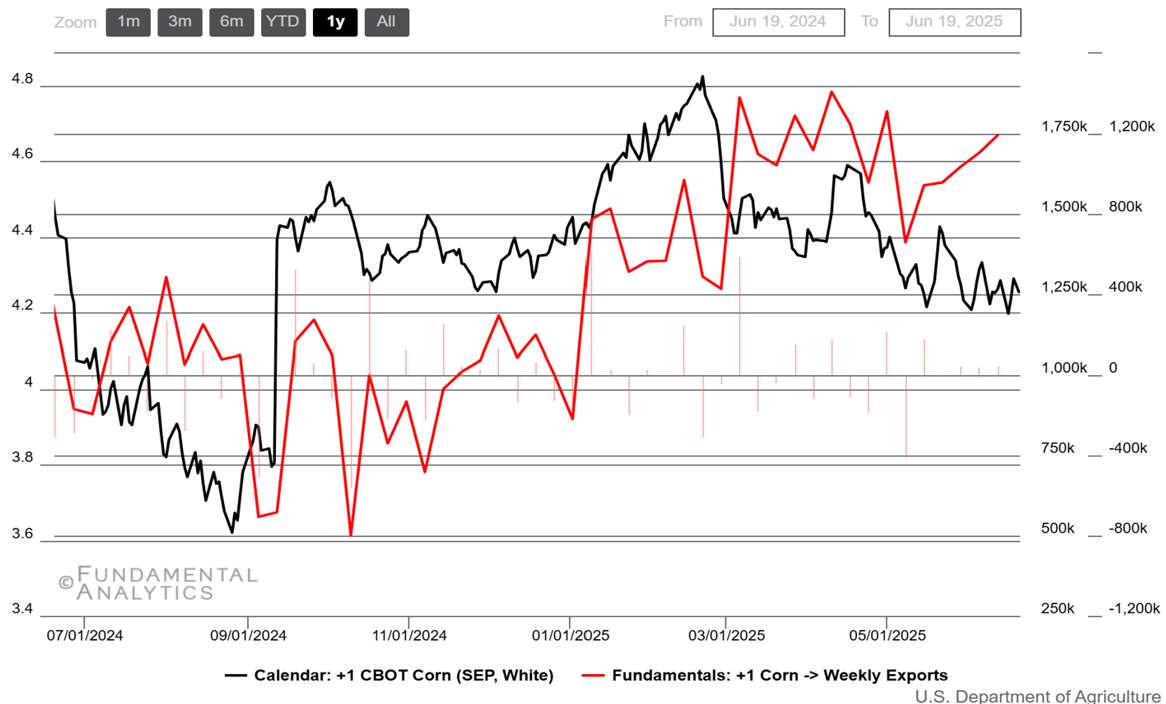
Corn prices struggle to find a pattern despite increased exports

  • A pair of early-June Crop Progress updates had corn 97% planted and 72% rated good/excellent, while the June WASDE shaved ending stocks only slightly—insufficient to spark fresh bull interest.
  • Exporters booked about 0.9 MMT of old-crop corn in the latest weekly FAS report—respectable but not stellar—just as EIA data showed ethanol output slipping 1% and inventories climbing 2%, hinting at tepid domestic offtake.
  • CONAB nudged its 2024/25 corn estimate up to roughly 130 MMT and early safrinha harvest reports remained strong, ensuring FOB Santos offers stayed well below U.S. Gulf values and capping any CBOT bounce.
  • The EU’s re-imposed grain quotas curb Ukrainian feed-grain access, while simultaneous U.S.–Vietnam talks (backed by MoUs to buy U.S. feed grains) hint at future demand re-routing; for now, neither development has offset the weight of ample world supply.
Soybeans

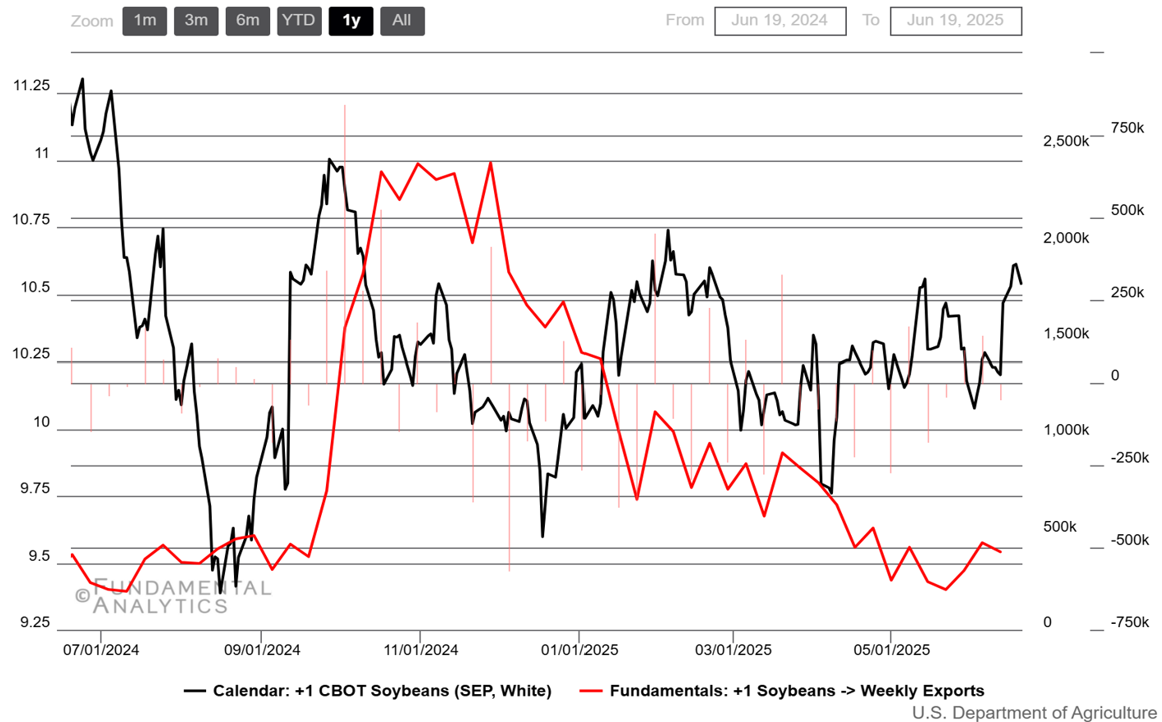
Soybean futures reach $10.5

  • USDA had about 90 % of soybeans planted and 68 % rated good/excellent in its first June progress report, with conditions holding near that level a week later—ample evidence of a comfortable new-crop supply that kept a weather premium from building.
  • CONAB nudged its record 2024/25 production call up to ≈169 MMT, while ANEC vessel line-ups show 12–15 MMT of beans sailing in June, leaving FOB Paranaguá sharply under U.S. Gulf and weighing on Chicago spreads.
  • In the week ended June 12 U.S. exporters booked 539 kt of old-crop sales, the best weekly tally in two months, yet purchases were led by Europe and Mexico; Chinese buying remained minimal.
  • A mid-June Reuters report detailed Beijing’s push to cut soymeal inclusion in feed to 10 % this decade—an initiative that could trim imports by ≈10 MMT per year and added a geopolitical headwind for CBOT bulls.