
Welcome to our weekly Commodity News Roundup, a curated newsletter featuring concise summaries of developments in the agriculture and energy commodities markets—along with direct links to the full articles and related charts from the Fundamental Analytics platform. Our goal is to give you a quick, insightful overview of the latest market drivers and spark your interest to explore the full stories.
This week’s energy topics include:
- LNG: Supply and demand conditions tighten as capacity lags behind surge in ‘bridge fuel’ interest
- Crude Oil: Oil prices slump amid optimism regarding an end to the U.S.-Iran War
- Gasoline: Gas prices have dropped slightly, but increasing travel and thinning reserves could add more pressure to gas prices ahead of travel season.
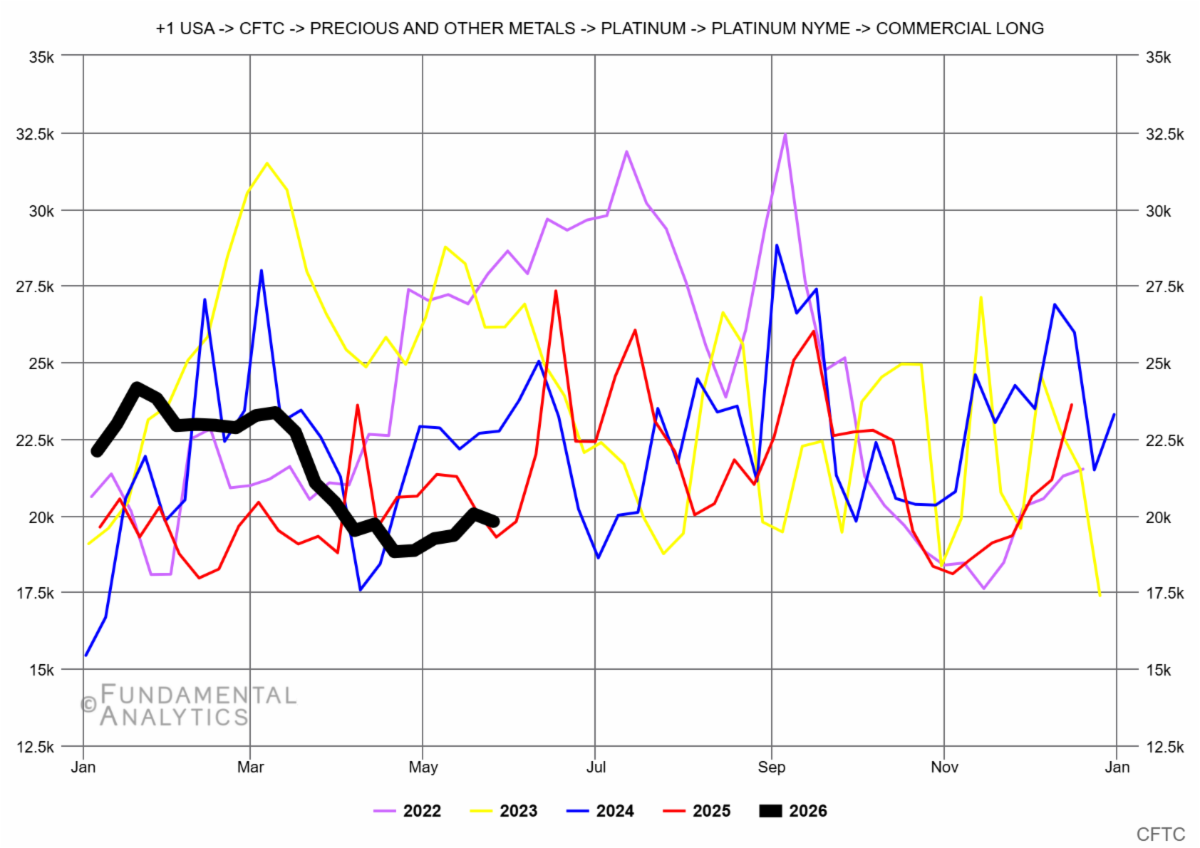
- Wild Card: Alternative fuels overtake coal for the first time since 1919; platinum could indicate renewable capacity expansion.
Let’s begin.
LNG
International Energy Agency
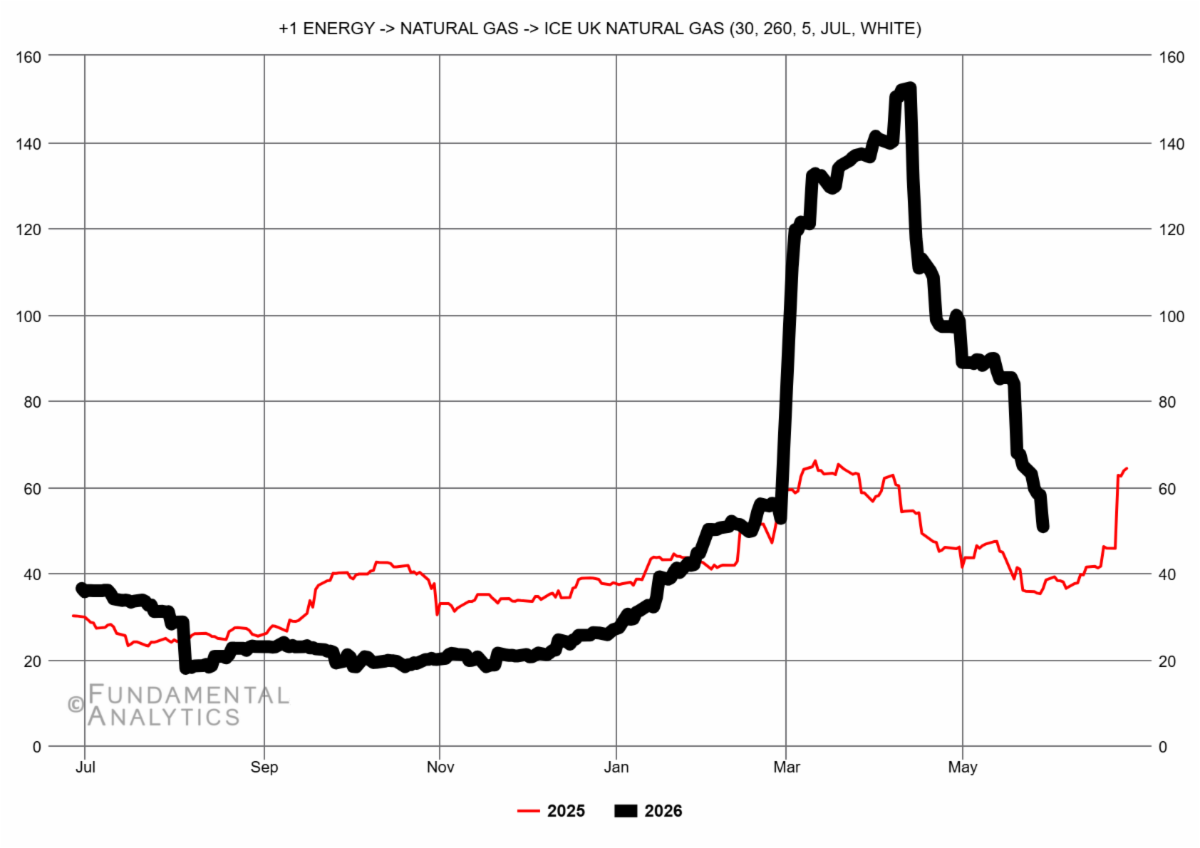
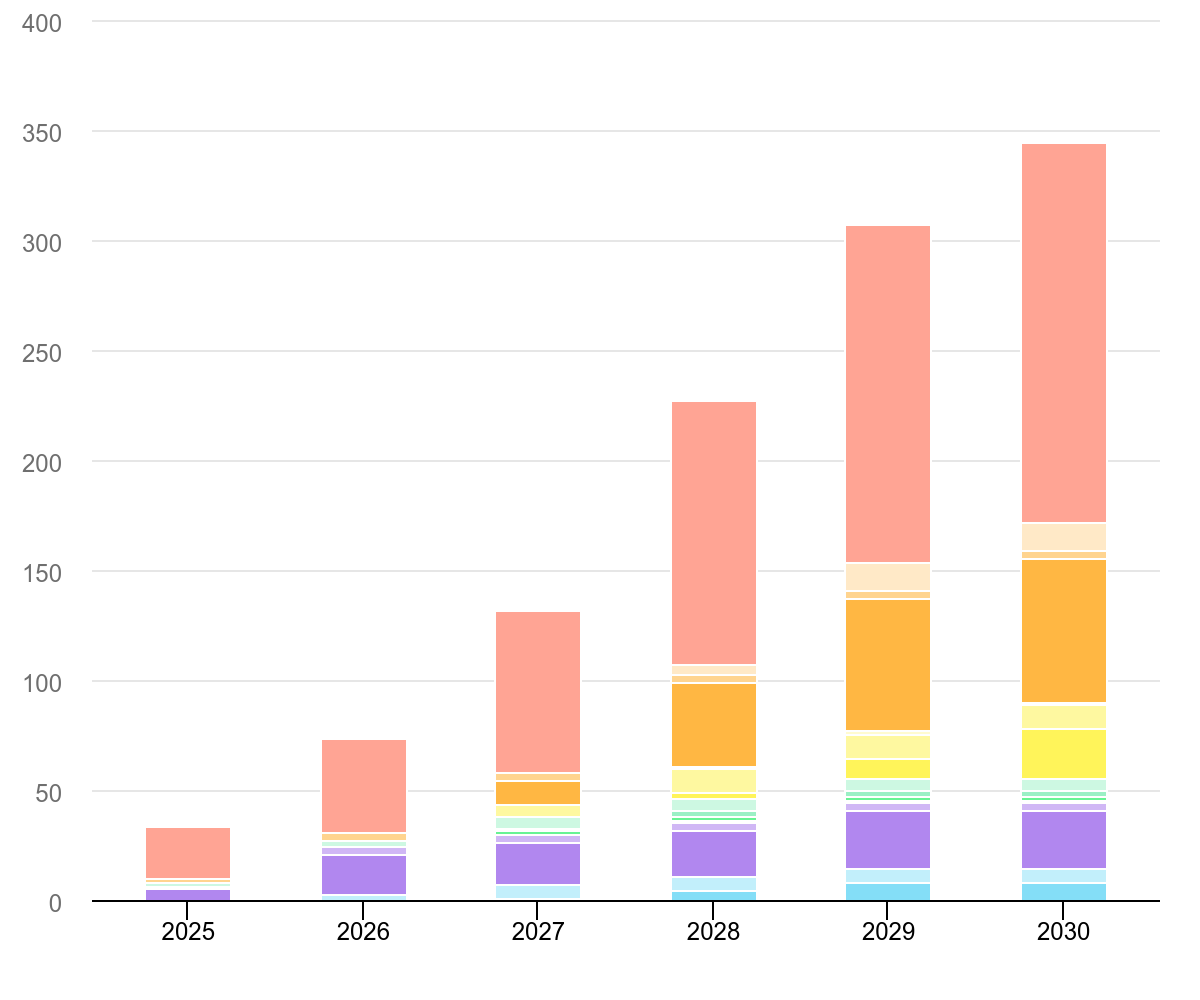
Global liquefied natural gas (LNG) markets are gaining renewed momentum as surging electricity demand from artificial intelligence (AI) data center expansion, geopolitical tension, and freedom of passage issues drive the need for reliable, continuous power. Mitsui & Co. CEO Kenichi Hori recently highlighted that this structural shift is positioning LNG as a critical bridge fuel, with the company actively pursuing investments across the U.S., Middle East, and Australia through equity stakes and long-term supply agreements to secure access to supply. As liquefaction capacity lags behind, supply and demand dynamics are expected to tighten. This reflects a broader industry trend where LNG is increasingly seen as a key solution to meet rapidly rising digital infrastructure demand, even as companies balance concerns about geopolitical stability and expanding capacity.
Source: Fundamental Analytics
Source: International Energy Agency
Crude Oil
Oil Prices Set to Slump 19% in May as Market Bets on U.S.-Iran Deal
Michael Kern, OilPrice.com
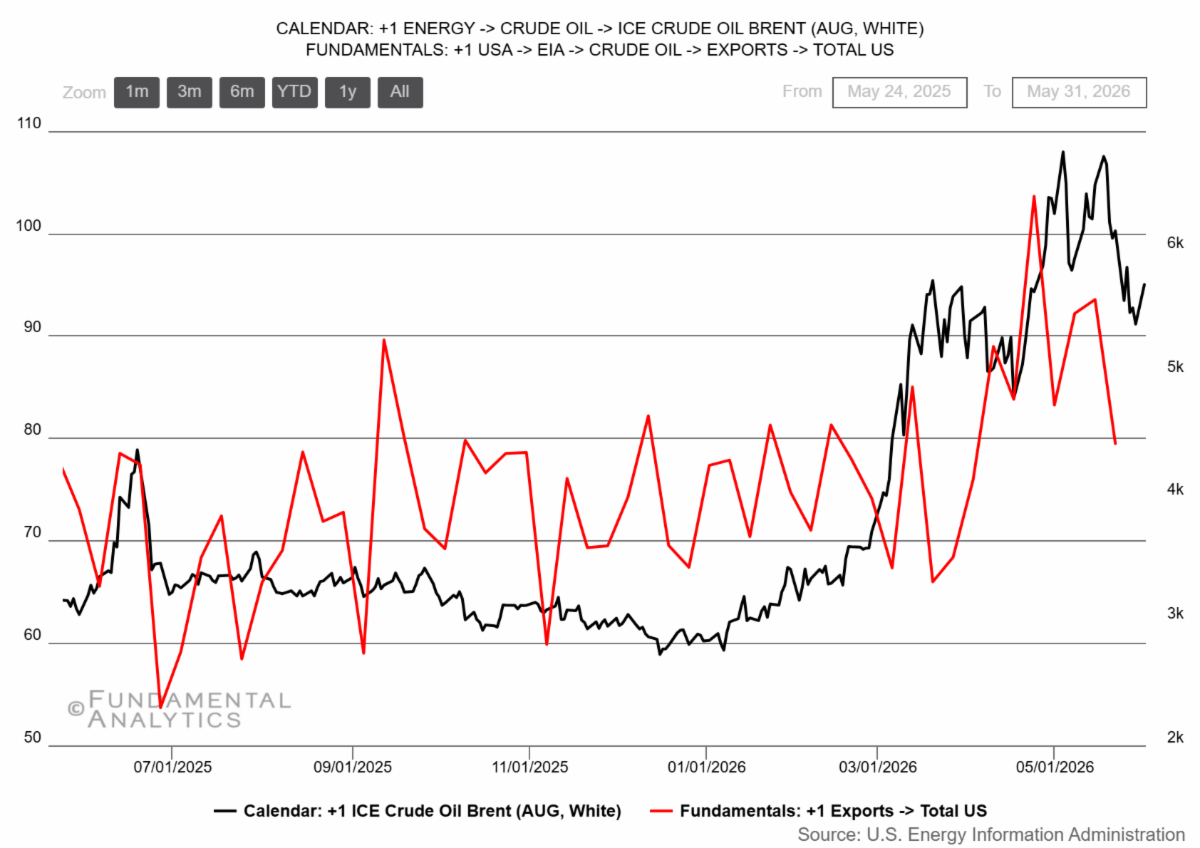
Brent crude has remained above 100$/barrel for most of the past two months with the stop of traffic through the Strait of Hormuz. However, Oil prices were set to plunge about 19% in May, potentially the steepest monthly drop since 2020, as markets reacted to expectations of an extended ceasefire and a possible U.S.-Iran agreement that could ease supply constraints. Despite April’s record surge driven by a historic supply disruption that pushed gasoline prices above $4 per gallon, optimism about reopening the Strait of Hormuz and improving oil flows drove Brent crude below $100 per barrel. Prices remained volatile, however, amid mixed signals about negotiations and ongoing U.S. military activity in Iran, with any deal still contingent on approval from President Trump and potentially a resolution to the ongoing Israeli military operation in Lebanon.
Source: Fundamental Analytics
Gasoline
Gas Prices Are Falling, But Will They Keep Going Down?
AAA
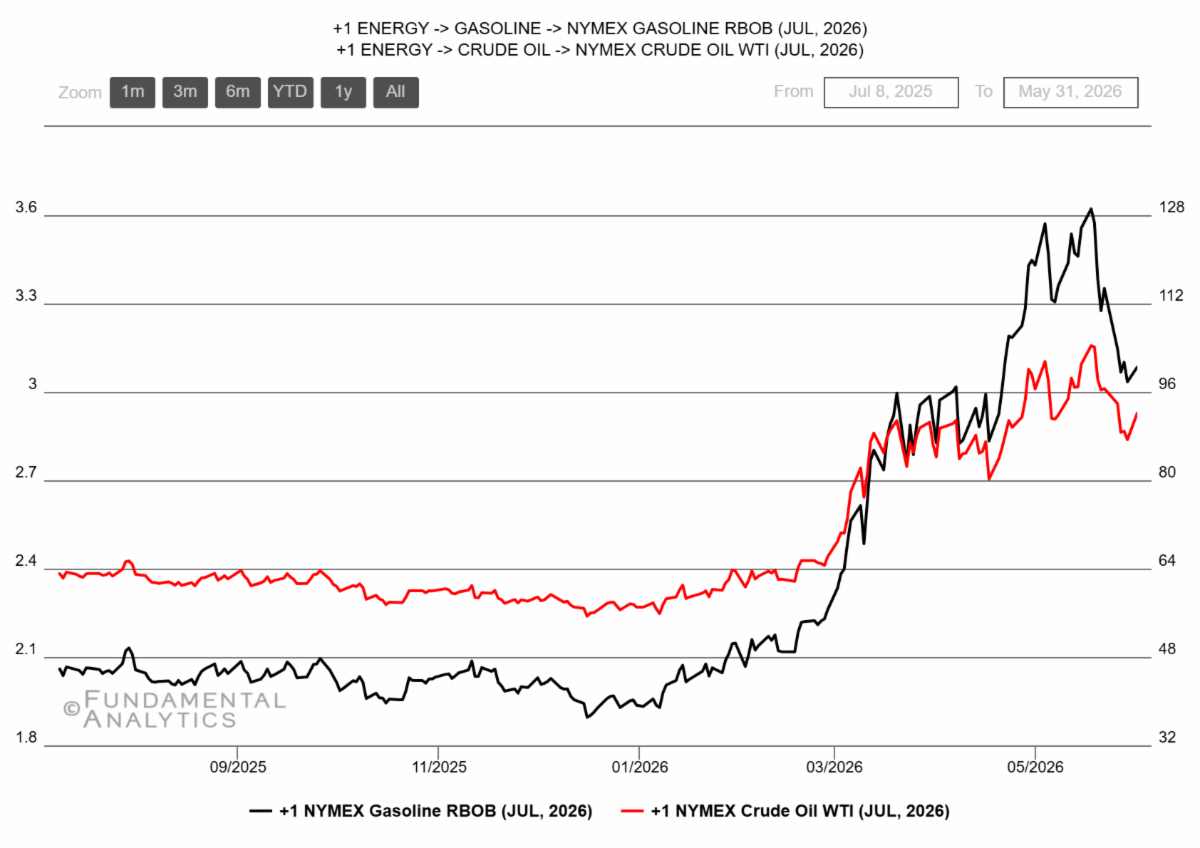
U.S. gasoline prices declined modestly in late May, with the national average falling 12 cents week-over-week to about $4.42 per gallon, largely driven by easing crude oil prices amid renewed peace talks with Iran. Despite this recent dip, gasoline remains at a four-year high and is expected to stay elevated during the peak summer driving season. Market fundamentals show tightening conditions, as gasoline demand rose to 9.25 million barrels per day while total domestic supply fell, even as production increased slightly. Furthermore, oil inventories are about 2% below the five-year average for this time of year, reinforcing underlying price support.
Wild Card
Renewables Beat Coal For The First Time Since 1919
Bruno Vendetti and Amy Kuo, Visual Capitalist
A recent analysis highlights a historic shift in global energy markets, showing that renewable energy sources generated 33.8% of the world’s electricity in 2025, surpassing coal’s 33.0% share for the first time since 1919. This milestone reflects a decade-long rise in renewables, driven primarily by rapid expansion in solar and wind power across major economies such as China, the U.S., and Europe, along with falling technology costs and increased clean energy investment. Platinum is a critical metal for renewable energy because it accelerates the chemical reactions necessary to generate “green” hydrogen and produce electricity in fuel cells, while also supporting wind and solar technologies. Platinum has been at a significant low-point, underscoring either a market focus on traditional energy sources or the boon for LNG amid turbulent geopolitical landscapes discussed above. Therefore, platinum may not be seen directly as an indicator of interest in renewable energy, but rather as an indicator of interest in renewable capacity specifically. The development marks a major turning point in the global energy transition, signaling that renewables are beginning to overtake traditional fuels, though continued investment and infrastructure growth will be needed to sustain this momentum.
Source: Fundamental Analytics
Trading Implications
Current dynamics across energy markets point to increasingly complex and interlinked commodity trade flows, with LNG emerging as a strategically critical fuel amid rising AI-driven power demand, lagging liquefaction capacity, and geopolitical risks affecting supply routes. At the same time, crude oil markets remain highly volatile, with prices reacting sharply to shifting expectations around U.S.-Iran negotiations and the potential reopening of key transit chokepoints like the Strait of Hormuz, introducing both downside risk and sudden supply shocks that could disrupt global trade balances. In refined products, gasoline prices, while easing slightly, remain structurally elevated due to strong seasonal demand, tightening inventories, and constrained supply, reinforcing resilience in product crack spreads. The accelerating renewable adoption—now surpassing coal globally—signals a structural transformation in energy demand, though near-term commodity flows still favor hydrocarbons, particularly LNG, as a bridge fuel. This divergence suggests a dual-speed market where traditional energy commodities remain dominant in trade and pricing power in the short run, while metals tied to clean energy capacity, such as platinum, could become increasingly important indicators of future trade shifts as energy transition investments scale.