
WTI and RBOB surged on Middle East disruption and Hormuz risk, then fluctuated on policy actions and U.S. stocks. Natural gas softened as mild weather, injections, and output offset LNG shocks.
Crude Oil
WTI Crude Oil soars on geopolitical uncertainty, but oversupply could absorb the bullish movement
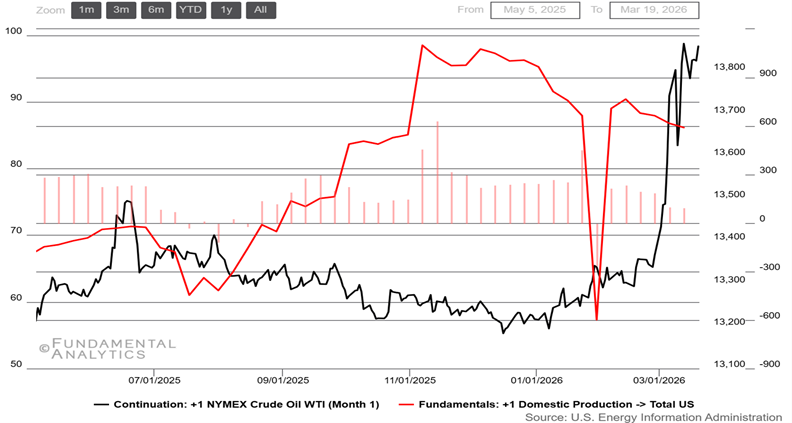
- Hormuz disruption drove a war-risk repricing: Escalating U.S.–Israel conflict with Iran and attacks on regional energy infrastructure kept flows through the Strait of Hormuz impaired, pushing WTI higher as the market priced in longer supply shut-ins; Iraq’s force majeure on foreign-operated fields amplified outage risk.
- Risk premium repeatedly “faded then rebuilt”: Reports of some vessels transiting Hormuz, plus talk of coordinated emergency supply measures (IEA stock releases, potential U.S. SPR releases), triggered sharp pullbacks even as the broader conflict backdrop stayed unresolved.
- U.S. crude stocks built on import strength, but products tightened: Consecutive EIA weeks showed crude inventories rising (import-led builds and higher Cushing stocks), while gasoline/distillate drew sharply and implied demand jumped—leaving WTI choppy as “crude heavy / products tighter” signals competed.
- U.S. supply cushion kept WTI lagging Brent: Near-record U.S. output, rising imports (including higher Venezuela/Mexico inflows), and an uptick in U.S. oil rigs helped widen the Brent premium and limited the durability of front-month WTI rallies.
- Demand fears rose alongside prices: The spike in energy costs revived “demand-destruction” talk and prompted policy responses aimed at easing domestic fuel pressure (e.g., Jones Act/clean-fuel flexibilities), keeping the market hypersensitive to any demand data shifts.
Gasoline
Gasoline prices explode to 3-year high on US-Iran conflict
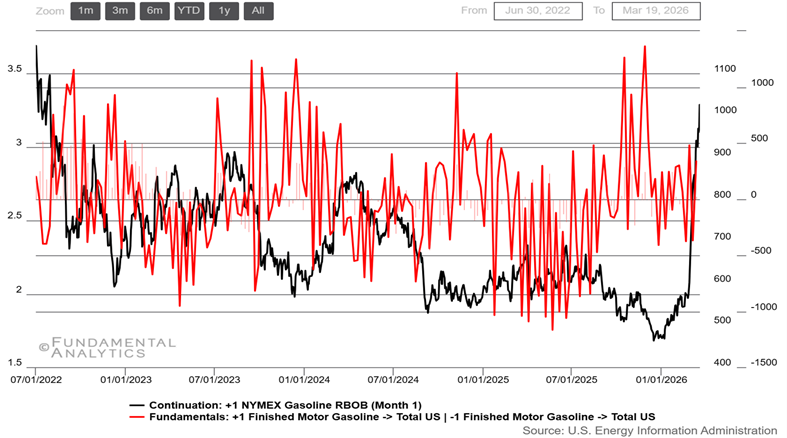
- Iran-war premium hit the pump fast: Crude’s surge on Middle East disruption pushed New York Harbor spot gasoline sharply higher and drove a steep jump in U.S. retail prices during the window.
- Stocks drew, but the cushion stayed: EIA showed consecutive gasoline inventory declines (multi-million barrel draws), yet inventories still sat above the seasonal 5-year norm—limiting how far the front month could reprice.
- Demand was “spiky,” not structurally tight: A one-week jump in implied gasoline demand (panic/precautionary buying as prices jumped) contrasted with a four-week average that was only modestly changed versus last year—keeping the bull case fragile.
- Refinery supply improved, then tightened at the margin: Utilization ran around ~91%, but gasoline output slipped (from ~9.9 to ~9.4 mb/d), and imports eased—supportive for RBOB, though not enough to erase the inventory overhang.
- Logistics and barrels “in motion” added volatility: Rising freight costs and big shifts in crude import/export flows tied to the conflict kept product pricing jumpy even when domestic fundamentals weren’t screaming shortage.
Natural Gas
LNG futures keep trading above $3 mark
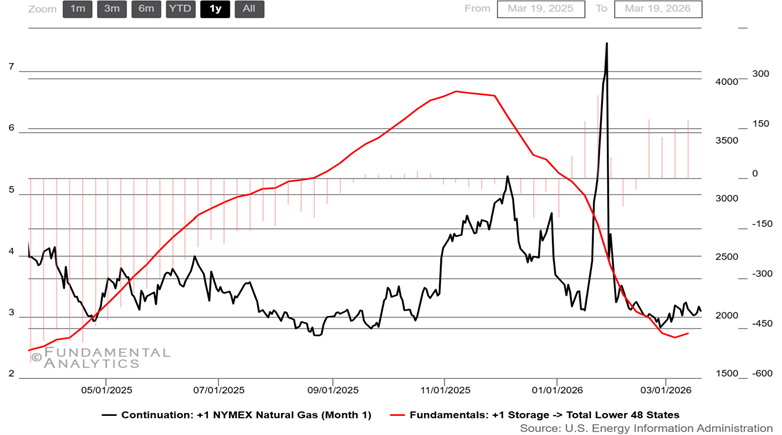
- Shoulder-season demand killed the winter squeeze: Storage flipped to a +35 Bcf injection, and inventories moved above the 5-year average, undercutting the scarcity narrative for the front month.
- Mild-weather forecasts drove sell-the-rally flow: Prompt weakness tracked warmer outlooks and expectations for lower heating load through late March.
- Supply stayed stubbornly high: EIA flagged record 2025 marketed production (118.5 Bcf/d) and a rising production path into 2026, while the gas rig count stayed sufficient despite a late-week dip.
- LNG exports supported, but capacity capped the upside: Global benchmarks were volatile and netbacks strong, yet EIA noted U.S. prices should be relatively insulated because export facilities were already running hard (limited incremental pull).
- Geopolitical LNG shock was tradable, not transformative: Strikes on major Middle East gas/LNG infrastructure spiked global prices and briefly lifted U.S. futures, but domestic fundamentals (mild weather + improving storage) kept the move contained.