
Dr. Ken Rietz
There was a time when the US imported a lot of Liquid Natural Gas (LNG), back in 2007 for example. But those times are long gone, with the US leading the world in LNG exports in 2023 and 2024, and likely to remain the leader for at least the near future. The reasons for all that are what we want to explore in this week’s commentary. But first, here is the graph of US exports of LNG.
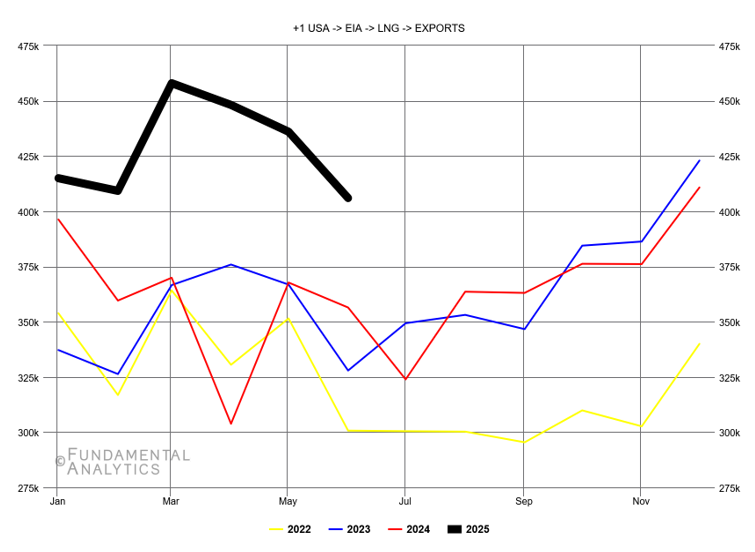
Figure 1: Billions of cubic feet of natural gas, liquified
(Note: One billion cubic feet of natural gas becomes 24 million tons of LNG, the more typical unit of measuring LNG.)
Why did the US become the top LNG exporter in 2023? It had been the fourth largest in 2022, but then the enormous Freeport LNG terminal resumed operations, and pushed the US above Australia and
Qatar to dominate the global LNG export market, as EnerKnol puts it. Venture Global’s recent opening of the Plaquemines facility will build on top of that. The rate at which LNG capacity is increasing is historic. The number of Final Investment Decisions (FIDs) shows an increase in production capacity of 55 million tons of LNG per year, adding roughly half again to the amount of LNG we are currently producing. That is the second-largest increase in US history.
But is the US likely to remain in that leading position for LNG exports? It certainly seems so, given the amount of increase in current facilities. But there is more to the story. There are several reasons. First are energy security concerns. The Russian-Ukrainian war has led Europe to reduce its reliance on Russian energy. They have determined to eliminate dependence on Russian natural gas by 2027, even earlier than the original cutoff date of 2028. This presents a dilemma for Hungary and Slovakia, which get natural gas from Russia by pipeline at cheap prices. But Austria has contracts with Gazprom into 2040, and the EU bill will be necessary to break those contracts. The recent Russian incursions into NATO countries have given new impetus to split off from Russia. The EU has increased its imports of US LNG, in part to compensate for a reduction in Norwegian LNG, and the amount of US LNG looks likely to continue increasing.
Another reason the US is likely to remain the leading LNG supplier is increasing demand in Asian markets. In 2024, China used an estimated 78 million tonnes of LNG in 2024, up 9% from 2023. But now, China is expected to reach a demand for 140 million tonnes of LNG per year by the mid-2030s, and it is not clear how much of that can be supplied by Russian pipelines. And the forecast for China’s demand for LNG is expected to drop after hitting 140 million tonnes, hitting 70 million tonnes by 2050. India is likely to increase their demand for LNG to 103 billion cubic meters (52 billion tons), doubling its current amount by 2030.
How does all of this affect trading? That, of course, depends on how the price of LNG changes. Since supply and demand are so strong, very few other things have any significant effect on price. The demand for natural gas is increasing more rapidly than is often forecast even a few years ago. Going long in natural gas futures is highly likely to do very well for a number of years.