
WTI wavered as EIA crude swung to a build, OPEC+ signaled more supply, and CPC/Hormuz headlines faded. RBOB faced inventory overhang. Natural Gas spiked on record draws, then eased with forecasts.
Crude Oil
Crude futures are up +9.6% YTD, but stronger than expected build-up threatens extra profit
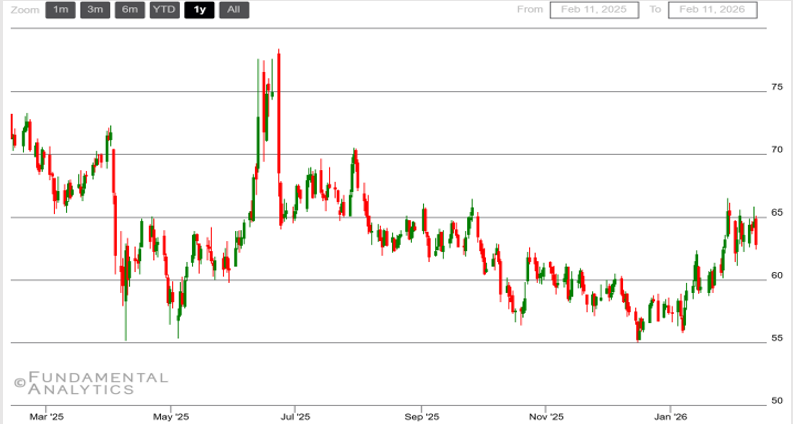
- U.S. balances flipped from supportive to bearish: U.S. EIA data showed crude swinging from a 3.5 mb draw to an 8.5 mb build, while gasoline stocks stayed ~4% above the 5-year average—softening the front-month tone despite distillate draws.
- Producer policy added a “more barrels ahead” ceiling: OPEC+ kept the Q1 pause in place but market chatter shifted toward resuming increases from April, even as OPEC January output edged lower (Nigeria/Libya constraints).
- Demand expectations softened at the margin: International Energy Agency flagged slower 2026 demand growth and a sizeable surplus outlook, while U.S. implied demand in the weekly data stayed mixed (notably softer y/y in gasoline/distillate).
- Middle East risk premium came and went: Shipping cautions around Iran and the Strait of Hormuz briefly lifted risk pricing, but the bid faded as escalation fears eased and the market refocused on surplus signals.
- Non-OPEC supply noise offered only transient support: Kazakhstan’s Tengiz disruption cut exports via the Caspian Pipeline Consortium well below schedule, but recovery headlines limited the duration of the tightness premium.
Gasoline
Gasoline demand softened amid soaring inventory
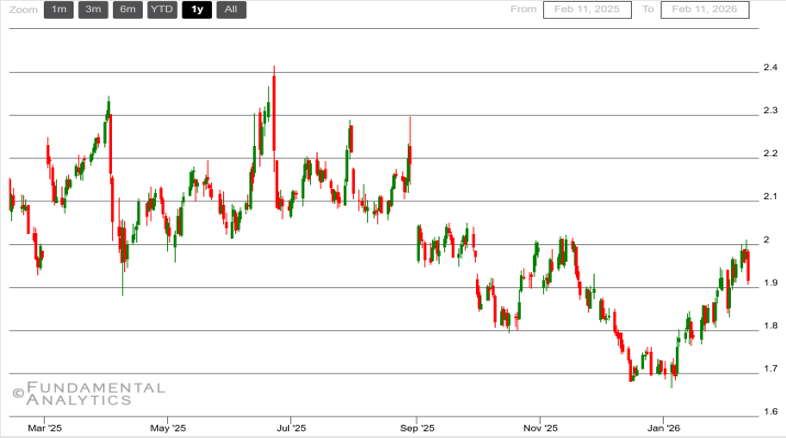
- Inventory overhang dominated: U.S. EIA data showed back-to-back gasoline builds (+0.7 mb, then +1.2 mb), leaving total motor gasoline ~4% above the 5-year average; finished stocks dipped, but blending components rose—ample blending supply capped the front month.
- Demand stayed “winter-flat”: Four-week gasoline product supplied averaged ~8.3 mb/d, roughly in line/slightly above y/y—supportive at the margin, but not strong enough to tighten balances against elevated stocks.
- Refinery supply steady, maintenance creep visible: Refinery utilization hovered around ~90% (edging lower), with gasoline production ~9.0–9.1 mb/d and imports ~365–394 kb/d, keeping physical availability comfortable into the period.
- Geopolitics added only a small product risk premium: Reports said a Ukrainian drone strike halted operations at Lukoil’s Volgograd refinery—a reminder that refinery outages can tighten Atlantic gasoline sentiment, but the U.S. stock cushion limited the follow-through in RBOB.
- Refining margin tone improved, but didn’t change the balance: PBF Energy results highlighted stronger margins (helped by lower crude/feedstock costs and tighter global fuels), lending some downside support yet the near-term U.S. gasoline surplus remained the main price anchor.
Natural Gas
Spiked prices returned to normal, India supports forward month curve
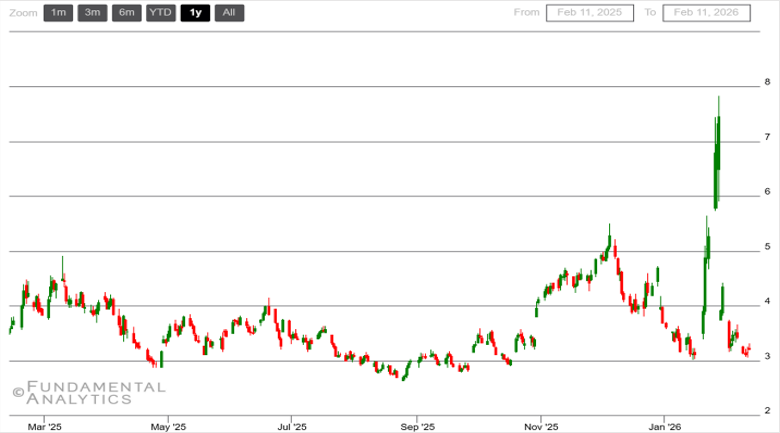
- Storage shock, then “still tight but not scarce”: Record 360 Bcf withdrawal tied to Winter Storm Fern was followed by a further 249 Bcf draw, leaving inventories at 2,214 Bcf (within range, ~130 Bcf below the 5-yr average).
- Weather premium unwound fast: U.S. EIA flagged extreme prompt backwardation and a historic prompt-month slide as forecasts turned milder, even while it lifted near-term price expectations.
- Supply response capped upside: EIA forecasts U.S. marketed gas output rising to ~120.8 Bcf/d (2026) and ~122.3 Bcf/d (2027)—a forward ceiling as higher prices incentivize drilling/production.
- LNG was supportive but volatile: The late-January freeze temporarily cut U.S. LNG production/exports and even triggered rare LNG imports, underscoring how domestic weather can swing export pull and front-month pricing around Henry Hub.
- Global demand/geopolitics firmed the LNG bid: Europe’s weak snowpack boosted gas burn (notably Italy / Austria), while India signaled willingness (via Petronet LNG) to buy U.S. LNG at the right price—supportive for forward export demand.