
Dr. Ken Rietz
Germany imports most of its fossil fuel energy. The biggest portion of that (34%) was petroleum, most of which was used for motor fuels. The usage of petroleum is dropping due to green energy generation, and it is not very controversial. On the other hand, 27% of energy imported was natural gas, and that has a much more colorful history. That is what we will dig into in this commentary. First, we give the price of ICE natural gas into the UK, which is highly correlated to the TTF price in the Netherlands, the standard price of natural gas in the EU, and, specifically, Germany.
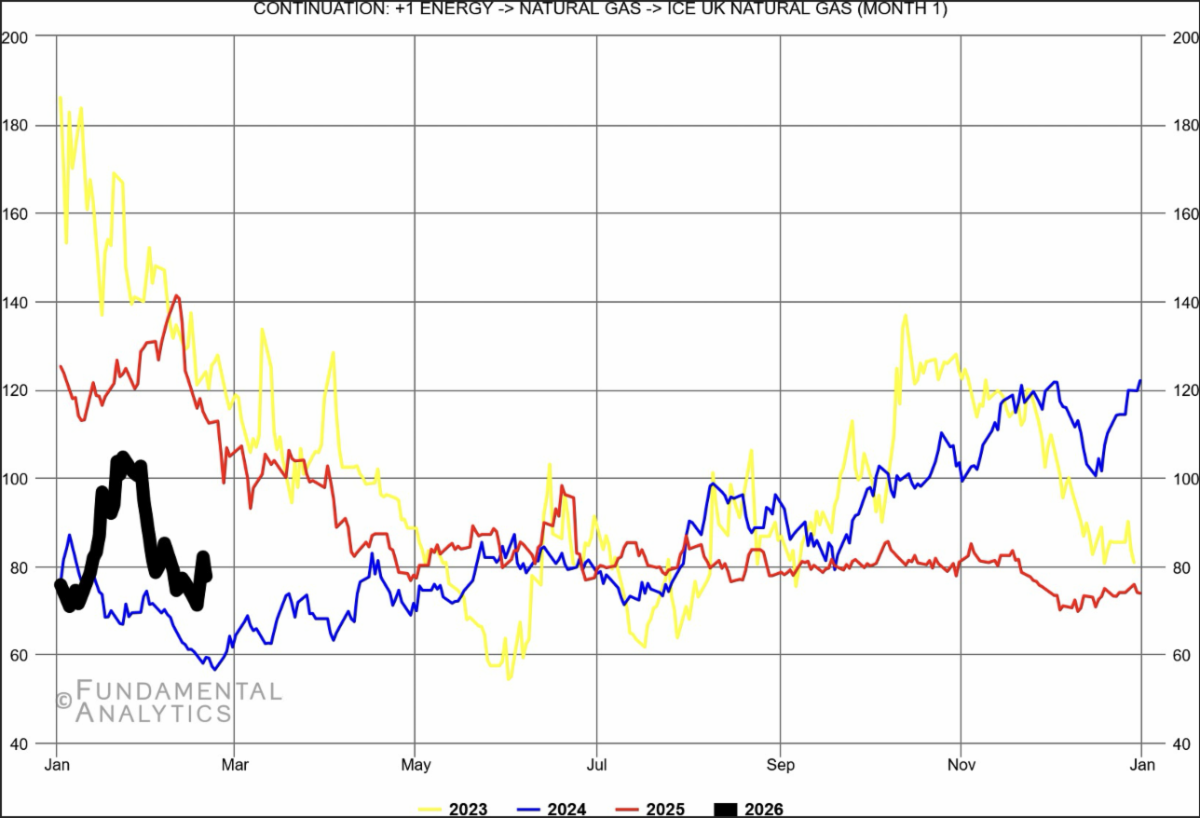
Figure 1: ICE natural gas in the UK, in pence per therm
To limit the size of this commentary, we are only looking back to the Cold War, starting in about 1970. The large majority of (West) German natural gas came from the Soviet Union, whose contracts were long (10 to 25 years) and were tied to the price of crude oil. The prices were fairly steady and quite reasonable, and the natural gas flowing into Germany kept growing until Germany became the country importing the largest amount of natural gas in the world, particularly in the years leading up to 2022. During the COVID episode, the demand for natural gas dropped considerably, as did the price. But the most significant events were the Russian invasion of Ukraine, followed shortly by the sabotage of 3 of the 4 Nord Stream pipelines, combined with the EU sanctions on Russian energy. This clearly put enormous pressure on Germany. They did have some reserves, and except for a mild winter, Germany would have drained them. Norway, in particular, provided help, and the ability to receive liquid natural gas (LNG) enabled Germany to relieve very tense periods. LNG is considered essential for continued operation.
But where does this leave Germany now? There are several tight spots that Germany has to navigate, such as having exhausted internal natural gas production to less than 5% of the amount they need. They have taken a variety of steps, such as
• Taken control of the local portion of Gazprom from Russia.
• Firmed up contracts with Norway for piped natural gas, and with the US for LNG shipments.
• Taken partial governmental control of the energy grid and LNG ports.
• Stepped up plans to produce biomethane.
What challenges does Germany face right now regarding natural gas? The majority of natural gas is used industrially, but it is also an essential component of residential heating. A mild winter—again!—has helped Germany by reducing reserves at a lower rate than usual, seasonally, although there have been some arctic cold blasts. Additionally, the prices of natural gas have been on the high end, and that complicates decisions. Germany’s reserves are low, at less than a third, far below 56% last year, and even lower than the 41% EU average. While lower than usual, this is still viewed as being sufficient, given the changing circumstances.
On top of the immediate challenges of potential natural gas shortages, there is the long-term challenge of their legally-binding carbon emission reduction goals, together with reducing end-user carbon sources, while keeping an eye on the fact that Germans pay one of the highest rates in the EU for electricity. This is an immense juggling act that will play out over the next decade at least.
How does this affect trading natural gas? The US is supplying, by LNG, a large portion of the gas that Germany needs, and that will drive prices up in the US. This does not look to change much in the near future, so the prudent investor will trade natural gas futures to the long side.